Address: 45a Nguyen Thuong Hien, Ward Binh Loi Trung, Ho Chi Minh City, Vietnam.
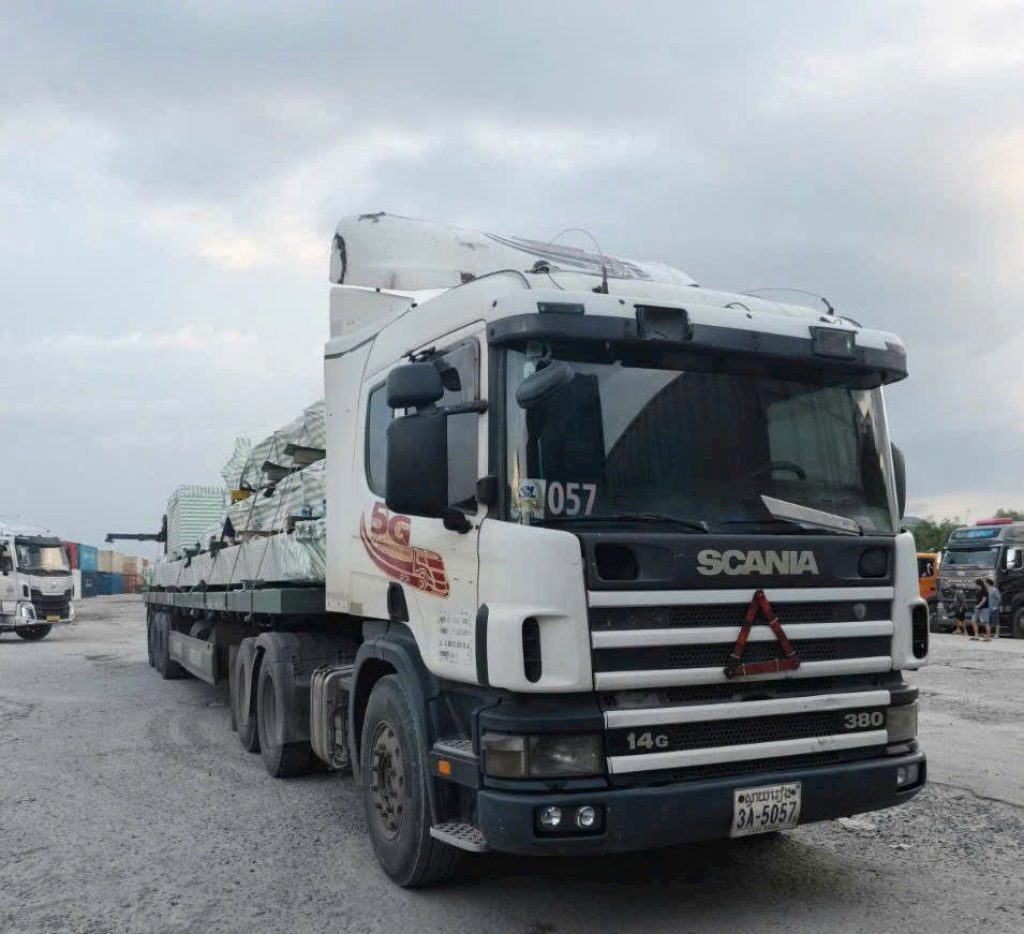
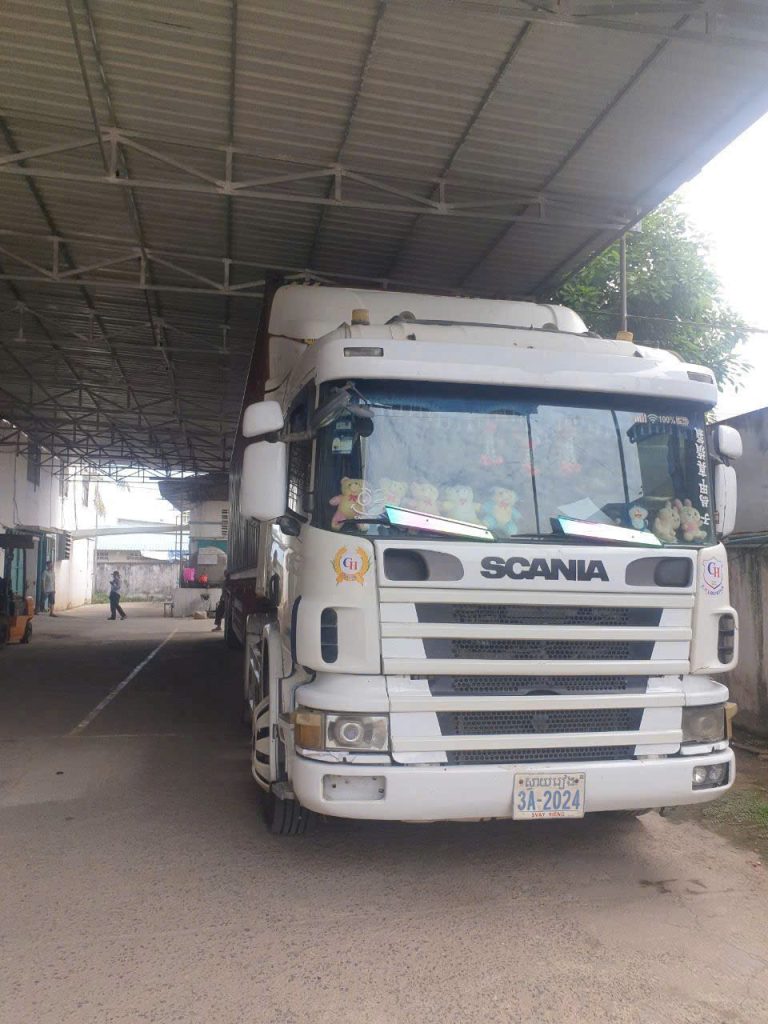
Because direct capacity at Cambodian seaports remains limited, routing cargo through Vietnamese gateways is still the most efficient way to serve Cambodia in regional supply chains. Doing it well requires synchronized customs planning on both sides of the border. AlphaTrans operates an asset-backed transit network across all major bilateral border gates — with our own fleet of 65 container trucks, a transit customs clearance team, and offices at both the Bavet border and Phnom Penh.
Service type | Routing | Handling & customs legs | Destination hubs |
LCL / Air | International origin → VN CFS/airport → Cambodia door | 1) Transit clearance at HCMC CFS (Cat Lai) or SGN Airport 2) Import clearance at Bavet 3) Final delivery to door | Bavet SEZs (Taiseng 1 & 2, Manhattan, Shangdong, Giga…) |
FCL (Import) | International origin → VN seaports → Cambodia | Option A (road): Cat Lai → Bavet SEZ. Option B (waterway): Cat Lai → Phnom Penh Port / PPSEZ via the sea–river channel. Includes port transit customs + cross-border clearance | Phnom Penh PPSEZ, Bavet SEZ, all provinces |
FCL (Export) | Cambodia → VN seaports → global destinations | 1) Export clearance at Bavet 2) Import transit clearance at the Vietnam entry gate 3) Port handling and ocean staging at Vietnamese terminals | Factory to Cat Lai / Cai Mep |

To avoid border delays, documentation must strictly follow cross-border transport regulations. AlphaTrans manages and verifies the full folder:
Critical B/L clause for transit cargo — the ocean B/L must explicitly read:
“CARGO TRANSIT VIA HO CHI MINH CITY SEA/AIRPORT – VIETNAM TO CAMBODIA BY TRUCK. CONSIGNEE WILL BE RESPONSIBLE FOR ON-CARRIAGE FROM HO CHI MINH CITY TO CAMBODIA. DESTINATION: CAMBODIA.”
Actual intervals fluctuate with seasonal peaks and border congestion; the figures above are our standard operating baselines.
Permitted Vietnamese sea & river ports | Authorized cross-border gateways (VN – KH) |
Cat Lai Port (Giang Nam, Phu Huu, CFS) | Moc Bai (Tay Ninh) – Bavet (Svay Rieng) |
Cai Mep Port (TCIT, CMIT, Thi Vai, SSIT) | Xa Mat (Tay Ninh) – Trapeang Phlong (Kampong Cham) |
ICD Phuoc Long 3 | Vinh Xuong (An Giang) – Kaam Samnor (Kandal) |
| Thuong Phuoc (Dong Thap) – Kaoh Roka (Prey Veng) |
| Le Thanh (Gia Lai) – O Yadav (Ratanakiri) |
| Tinh Bien (An Giang) – Phnom Den (Takeo) |
| Ha Tien (Kien Giang) – Prek Chak (Kampot) |
| Dinh Ba (Dong Thap) – Banteay Chakrey (Prey Veng) |
| Binh Hiep (Long An) – Prey Voar (Svay Rieng) |
Since 2016, AlphaTrans has continuously invested in owned infrastructure on this corridor:
For LCL and low-value commercial goods that need minimal administrative overhead:
Q1: When should I choose the sea/river barge route over cross-border trucking? Three situations: (1) heavy industrial cargo exceeding road axle-load limits; (2) high-volume batches (5–10+ TEUs) where budget beats speed — barge solutions typically cut logistics cost by 30–40% versus dedicated trucking; (3) peak seasons when land checkpoints such as Moc Bai/Bavet face severe congestion.
Q2: How does AlphaTrans handle CDC tax-exempt projects in Cambodia? Companies under Council for the Development of Cambodia (CDC) incentives qualify for 0% duty on approved materials and machinery. We review your CDC Master List before loading, match descriptions/HS codes/quantities across the B/L and invoice, and lodge files into Cambodia’s ASYCUDA system so no duty re-assessment occurs on arrival.
Q3: Can transit cargo from Europe/China pass through Vietnam without paying Vietnamese taxes? Yes. Under the OLA framework, international cargo arriving at Cai Mep or Cat Lai never enters the Vietnamese domestic market: the container stays under customs bond, transit documents are processed within 24 hours of discharge, and the cargo moves by bonded truck or barge to Phnom Penh without triggering Vietnamese import duty or VAT.
Address: 45a Nguyen Thuong Hien, Ward Binh Loi Trung, Ho Chi Minh City, Vietnam.