
Booking a truck from Ho Chi Minh City to Phnom Penh takes one phone call. Getting that truck through the border without waiting charges is a different job entirely.
At AlphaTrans, we run daily cross-border trucking between Vietnam and Cambodia through Moc Bai–Bavet, Hoa Lu–Trapeang Sre, Tinh Bien–Phnom Den and Xa Xia–Prek Chak. Most of the delays we are called in to fix have nothing to do with the truck. They start weeks earlier — in the documents, the HS Code, or an import license nobody checked.
Below are the seven issues we see most often on this route, what each one costs in practice, and what to verify before the cargo is loaded. If you are still comparing transport options, start with our main guide to Vietnam to Cambodia transportation first, then come back here for the risk checklist.
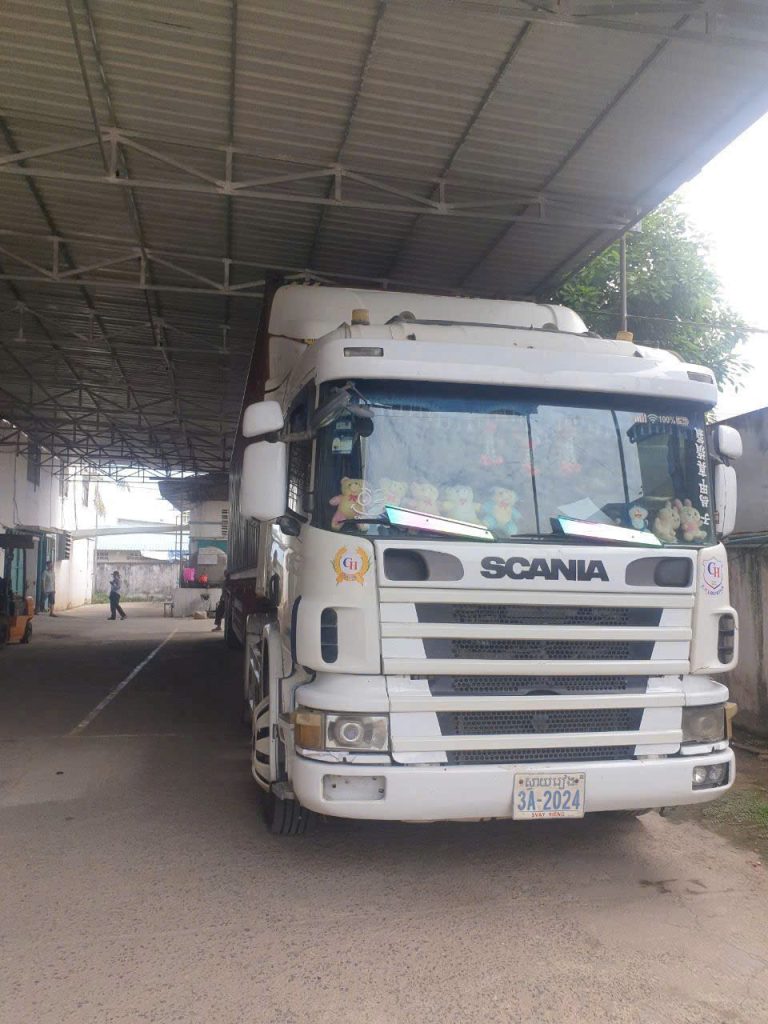
Quick view: the 7 issues, their cost, and when to prevent them
| # | Issue | Typical consequence | Prevent it at |
|---|---|---|---|
| 1 | Import license not checked | Truck held at border 2–10+ days | Booking stage |
| 2 | Incomplete documents | Clearance delay, missed delivery slot | Before truck departs |
| 3 | Declaration ≠ actual goods | Physical inspection, re-declaration | Commercial docs stage |
| 4 | C/O invalid for preference | Full duty instead of 0% (ATIGA) | Before shipment |
| 5 | HS Code rejected | Reclassification, duty change | Quotation stage |
| 6 | Waiting & storage charges | Cost far above the quoted rate | All of the above |
| 7 | Specialized inspection missed | Cargo held for quarantine/quality check | Booking stage |
1. The cargo is loaded before anyone checks if an import license is needed
This is the single most expensive mistake on the route. The shipper prepares the goods, books the truck, fixes a delivery date — and only at Bavet does anyone discover the commodity needs an import permit from a Cambodian ministry.
Licenses in Cambodia are issued per commodity group and can take days to weeks. Goods that look “normal” from the Vietnamese export side — food, cosmetics, chemicals, medical items, used machinery — are often exactly the ones with import conditions on the Cambodian side.
Check before loading: Does this HS Code require an import license in Cambodia? Who applies — exporter or consignee? How long does issuance take? Our customs clearance team runs this check as part of every Cambodia quotation.
2. The truck is ready, the documents are not
A shipment cannot clear faster than its weakest document. The set we verify on every Vietnam–Cambodia file:
- Commercial Invoice and Packing List (matching quantities, values, consignee)
- Sales Contract
- Certificate of Origin (usually Form D under ATIGA)
- Import license or specialized certificates, where applicable
- Clear goods description and confirmed HS Code
On a cross-border file, both customs authorities read the same paper. One mismatch — a consignee name spelled differently, an invoice number that doesn’t match the C/O — and clearance stalls on one side even when the other side already released the cargo. For factory and project deliveries in Cambodia, where unloading crews and cranes are booked by the hour, a one-day document delay multiplies into real money.
3. What's declared isn't what's in the truck
Vague product names (“machine parts”, “household goods”) invite inspection. When Cambodian customs opens the container and finds goods whose material, function or condition differs from the declaration, the file moves into clarification: new documents, re-declaration, sometimes a duty reassessment.
The goods description drives everything downstream — HS Code, duty rate, license requirement, inspection requirement. For machinery, chemicals, electronics and mixed project cargo, spend the extra hour writing an accurate technical description. It is the cheapest insurance on this route.
4. You have a C/O — but it doesn't earn the preferential duty
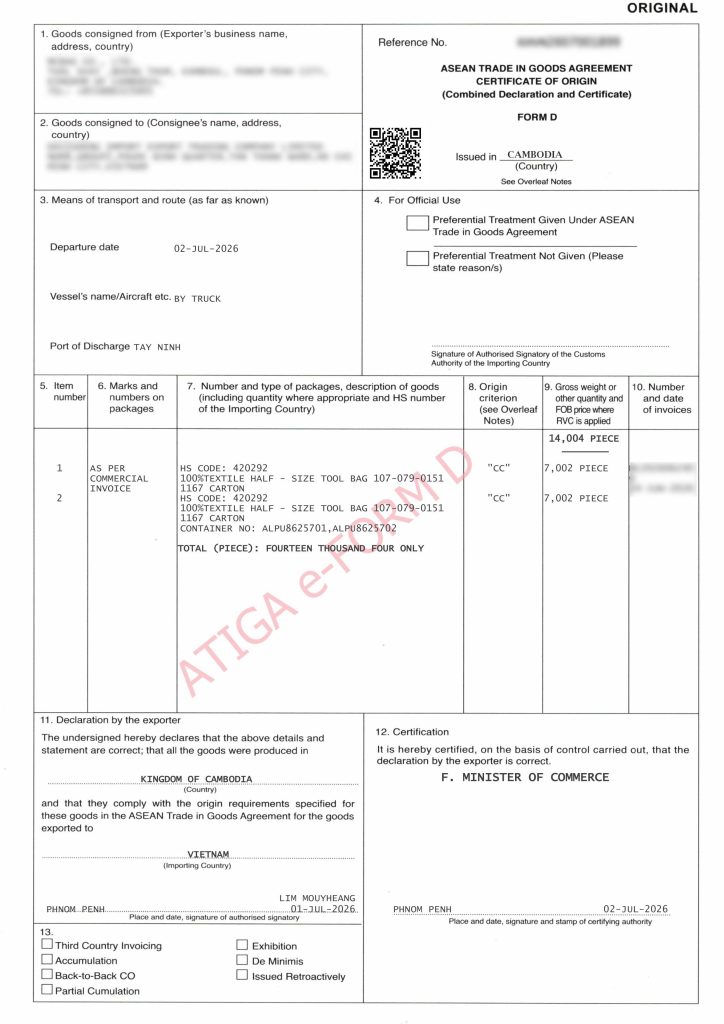
Under ATIGA, most Vietnamese-origin goods enter Cambodia at 0–5% duty if the Form D is valid. “Valid” means every field matches the shipment: exporter, importer, HS Code, invoice number, origin criterion, quantity, weight.
We regularly see importers budget for 0% duty, then pay the full MFN rate because the C/O carried the wrong invoice number or an origin criterion that couldn’t be supported. On a full container of finished goods, that difference can erase the entire margin of the sale. Treat the C/O as a customs document, not a formality — have it cross-checked against the invoice and packing list before the truck moves.
5. The HS Code is challenged and the goods are reclassified
Vietnam and Cambodia both use the ASEAN Harmonized Tariff Nomenclature, but interpretation differs in practice — especially for multi-function equipment, chemical preparations and consumer goods. If Cambodian customs disagrees with the declared code, the shipment waits while it is reclassified, and the new code can change the duty rate, trigger a license requirement, or add an inspection step.
The fix is procedural, not lucky: compare the intended HS Code with the Cambodian side (through your broker or consignee’s agent) at quotation stage, before any price is committed to the buyer. See our guide on how to determine the correct HS Code for your goods for the classification logic that applies on both sides.
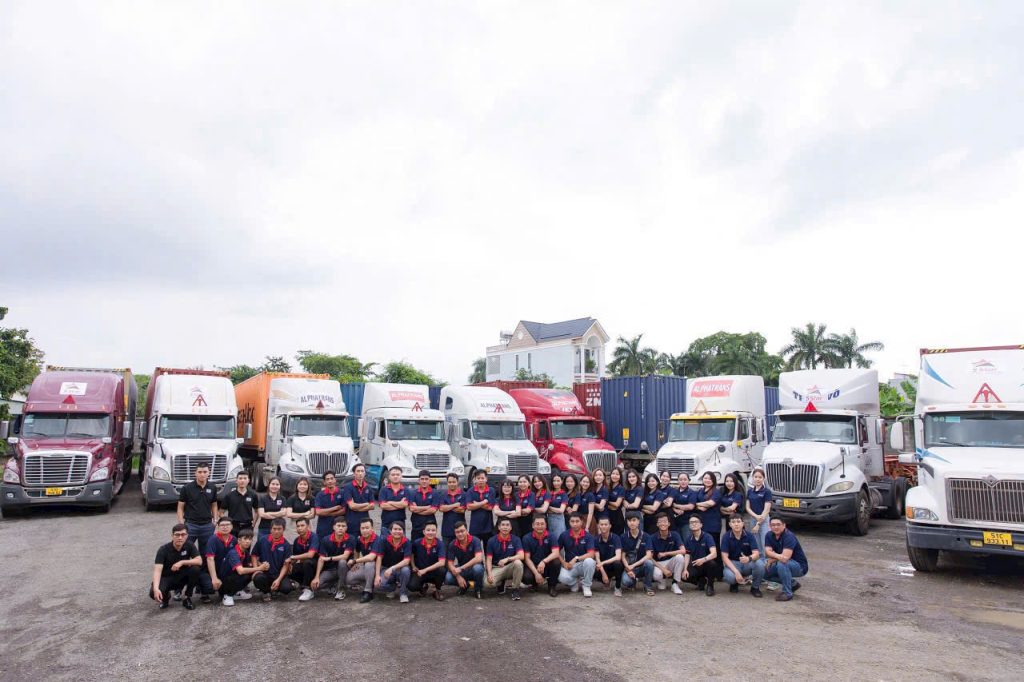
6. Waiting and storage charges quietly double the "cheap" trucking rate
Trucking Ho Chi Minh City–Phnom Penh is a commodity price; everyone quotes within a narrow band. Where budgets actually blow up is detention: the truck waiting for a license, waiting for customs clarification, waiting for a consignee who isn’t ready.
A quotation that is $100 cheaper but comes with no document check is not cheaper. Before comparing rates, ask each provider the questions that determine the real landed cost:
- Are all documents verified before departure — by whom?
- Is the HS Code confirmed with the Cambodian side?
- Does the cargo need an import license, and who tracks it?
- Is the consignee confirmed ready, with unloading arranged?
- What are the detention and storage charges per day if the shipment waits?
7. Quarantine and specialized inspection are discovered at the border
Food, agricultural products, plants, animal-origin goods, chemicals and certain medical and electrical items may be subject to quarantine, food-safety or quality inspection on import into Cambodia. Missing this doesn’t just delay the truck — for perishable or temperature-sensitive cargo, it can destroy the shipment’s commercial value entirely.
Regulated goods need a different plan from general cargo: the inspection body, sample requirements and certificate timeline all have to be mapped before booking, not after arrival.
Ship to Cambodia with the risks handled before departure
If you have a shipment planned — general cargo, factory delivery, project equipment or regulated goods — send us the commodity name, HS Code (if known), quantity, pickup point and delivery address in Cambodia. Our cross-border team will check the import conditions and send you a complete plan with a transparent all-in cost, usually within one working day.
→ Get a Vietnam–Cambodia shipping quote or explore the full Vietnam to Cambodia transportation service.
FAQ: Shipping from Vietnam to Cambodia
Do all goods shipped to Cambodia need an import license?
No. Most general cargo does not. However, regulated categories — food, cosmetics, chemicals, medical items, used machinery and some electronics — may require a license or ministry approval. The requirement follows the HS Code and should be verified before the cargo is loaded, because licenses can take days to weeks to issue.
Which border gates does AlphaTrans use for Vietnam–Cambodia trucking?
We operate through all main gates: Moc Bai–Bavet (the primary HCMC–Phnom Penh corridor), Hoa Lu–Trapeang Sre, Tinh Bien–Phnom Den and Xa Xia–Prek Chak. The optimal gate depends on the pickup point, cargo type and clearance plan.
Does a Certificate of Origin guarantee 0% duty in Cambodia?
No. Preferential duty under ATIGA applies only if the Form D is valid and consistent with the shipment documents — exporter, importer, HS Code, invoice number, origin criterion, quantity and weight must all match. An invalid C/O means the importer pays the standard duty rate.
Why do trucks get stuck at the Vietnam–Cambodia border?
The most common causes, in order: incomplete or inconsistent documents, an import license that isn’t ready, an HS Code dispute, physical inspection of the cargo, and a consignee who isn’t ready to receive. Almost all of these are preventable with a document check before departure.
How long does trucking from Ho Chi Minh City to Phnom Penh take?
With documents complete and clearance pre-arranged, standard door-to-door transit is typically 1–2 days via Moc Bai–Bavet, and express service can deliver within about 8 hours. Shipments with license or inspection requirements need additional lead time that should be planned before booking.
Can AlphaTrans handle both customs and trucking, on both sides?
Yes. With offices in Ho Chi Minh City and Phnom Penh, our own cross-border truck fleet and licensed customs teams in both countries, we manage the shipment end-to-end: document check, clearance on both sides, border crossing without transloading, and final delivery.


