Two things decide whether a shipment on this lane goes smoothly: the certificate of origin, and the wood in your packaging. Get either wrong and the problem doesn’t surface until the container is already at an Australian wharf — by which point it’s a hold, not a phone call.
Vietnam and Australia trade under two overlapping free trade agreements, and Australian biosecurity inspects incoming cargo more rigorously than almost any other market Vietnamese exporters ship to. Neither is complicated once you know the rules. Both are expensive to get wrong at destination rather than before departure.
AlphaTrans handles shipping from Vietnam to Australia and the return leg with in-house customs clearance at every major Vietnamese port and our own trucking fleet for the domestic leg.

Procedures of export shipment to AUSTRALIA
1. Transit Times and Sailing Schedules
| Route (Vietnam → Australia) | Direct service | Transshipment service (typically via Singapore) |
|---|---|---|
| HCMC – Sydney / Melbourne | 12–14 days | 19–25 days |
| Hai Phong – Sydney / Melbourne | 16–18 days | 22–28 days |
| HCMC – Brisbane | 14–16 days | 20–26 days |
| HCMC – Fremantle | 10–12 days | 18–22 days |
Transit times are port-to-port references and vary with vessel schedule, weather and port conditions. Contact us for the current weekly sailing schedule.
Direct vs. transshipment. A direct sailing is faster and involves fewer handling points. Transshipment, usually through Singapore, extends transit by roughly a week but often reaches more Australian ports and offers more departure choices for LCL cargo. If a Fremantle or Brisbane direct service isn’t running the week you need, we quote the transshipment option rather than leaving you waiting for the next direct sailing.
2. Rate Reference and Service Options
2.1 Indicative FCL Rates (USD)
| Loading port (Vietnam) | Discharge port (Australia) | 20’DC | 40’DC / 40’HC |
|---|---|---|---|
| HCMC (Cat Lai) | Sydney / Melbourne | $650 – $950 | $1,100 – $1,600 |
| HCMC (Cat Lai) | Brisbane | $700 – $1,000 | $1,200 – $1,700 |
| HCMC (Cat Lai) | Fremantle | $600 – $900 | $1,000 – $1,500 |
| Hai Phong | Sydney / Melbourne | $850 – $1,150 | $1,400 – $1,900 |
| Da Nang | Sydney / Melbourne | $800 – $1,100 | $1,350 – $1,850 |
2.2 Indicative LCL Rates (USD per CBM)
| Route (from Vietnam) | Destination | Rate per CBM | Min. charge |
|---|---|---|---|
| HCMC | Sydney / Melbourne | $10 – $25 | 1 CBM |
| HCMC | Brisbane | $12 – $30 | 1 CBM |
| HCMC | Adelaide / Fremantle | $15 – $35 | 1 CBM |
| Hai Phong / Da Nang | Sydney / Melbourne | $20 – $40 | 1 CBM |
Rates last reviewed July 2026, exclude local charges (THC, CFS, documentation, LSS) and vary with GRI, BAF and peak-season demand. Contact us for a live itemised quote.
Above roughly 10–12 CBM, a 20′ FCL container is usually cheaper than paying LCL by volume — ask us to price both if your shipment sits near that line.
2.3 Service Types
- Door-to-Door (DDU/DDP) — pickup in Vietnam through Australian customs clearance to the final warehouse
- Door-to-Port — collection at origin, delivery to the destination port
- Port-to-Door — port collection, delivery to the warehouse
- Port-to-Port — for shippers handling their own Australian clearance and inland transport

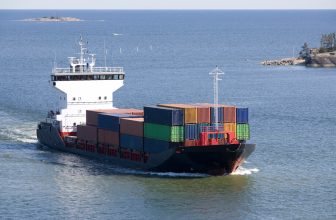
Alphatrans ensures your Cargo Shipping To Australia moves smoothly through the docks
3. Australian Biosecurity: The Rule That Trips Up First-Time Shippers
Australia runs one of the strictest biosecurity regimes of any market on our route network, and it applies to cargo the shipper doesn’t always think of as “biological” — pallets, dunnage, and any solid wood packaging.
- The wood packaging rule. Under ISPM 15, all solid wood packaging over 6mm thick — pallets, crates, dunnage — must be heat-treated or fumigated before it leaves Vietnam, and stamped with the official IPPC mark showing the treatment code and facility number. Methyl bromide fumigation is being progressively restricted for environmental reasons, and heat treatment (HT) is increasingly the accepted default. A shipment with untreated or unstamped wood packaging isn’t quietly waved through — Australian authorities intercept it, and remediation options are treatment on arrival at the importer’s cost, re-export, or destruction, any of which is far more expensive than treating it correctly before the container is sealed.
- BICON governs everything else. Australia’s Biosecurity Import Conditions system (BICON) sets specific requirements for over 20,000 categories of plant, animal, mineral and biological products — well beyond the commodities that obviously sound “agricultural.” Furniture with natural fibre upholstery, packaging with plant-based fill, and certain finished timber products can all trigger conditions that a general cargo shipper wouldn’t anticipate.
- What we do about it. We check your commodity and packaging against BICON before the container is loaded, not after it’s declared in Australia. For any shipment involving wood packaging, we confirm the treatment certificate is in hand and correctly worded before the vessel sails — a missing declaration line is a common, entirely avoidable hold.
4. AANZFTA and CPTPP: Two Routes to Preferential Duty
Vietnam and Australia trade under two separate agreements that can both apply to the same shipment — AANZFTA (ASEAN–Australia–New Zealand FTA) and CPTPP, since both countries are members of each. Which one delivers the better duty rate depends on the HS code and the rule of origin your product actually meets, and it isn’t always the more familiar of the two.
A few specifics worth knowing before your supplier issues documentation:
- Form AANZ has no self-certification option. Unlike some newer-generation FTAs, AANZFTA requires the certificate to be issued through an authorised body — an exporter can’t simply declare origin on the commercial invoice. Vietnam issues a paper C/O; Australia and New Zealand issue an electronic version that gets printed for submission to ASEAN customs. Budget the lead time for a formal issuance, not a same-day declaration.
- CPTPP allows exporter self-certification, which can be faster to arrange for exporters who qualify — but its rules of origin differ from AANZFTA’s, so a product qualifying under one doesn’t automatically qualify under the other.
- AANZFTA’s rules of origin were updated under the Second Protocol (effective April 2025). If you’re working from an older reference guide or a certificate template your supplier has used for years, confirm it reflects the current procedure before relying on it.
We check both agreements against your specific HS code and tell you which produces the lower landed cost — rather than defaulting to whichever certificate your supplier is used to filling out.

Certificate of Origin (C/O) Form AANZ
5. How a Shipment Runs
- Quotation. Commodity, HS code, volume, dimensions, weight, Incoterms and whether wood packaging is involved.
- Biosecurity and duty check. We flag any BICON condition on your commodity and confirm whether AANZFTA or CPTPP gives the better rate.
- Booking. Space confirmed against your cargo ready date, direct or via transshipment.
- Document preparation. Form AANZ or CPTPP certificate arranged with the correct lead time; wood packaging treatment certificate verified before loading.
- Collection and export clearance. From your factory or our CFS, cleared by our own brokerage.
- Transit and tracking. Milestone updates through departure, any transshipment, and arrival.
- Australian import clearance and delivery. Coordinated with our Australian partner through to final warehouse delivery.
6. Commodities on the Vietnam–Australia Lane
| Direction | Main categories |
|---|---|
| Export from Vietnam to Australia | Furniture and interior décor (Binh Duong, Dong Nai), textiles and footwear, coffee, cashews and pepper, construction materials, machinery and components |
| Import from Australia to Vietnam | Beef and dairy, wheat and grain, coal and raw materials, machinery and industrial equipment, wool and cotton |
Furniture exports carry a compounding requirement: both the product itself and any wood-based packaging around it can fall under BICON conditions, so packaging compliance needs checking alongside the commodity, not as an afterthought.
7. Why Customers Use AlphaTrans on This Lane
- Biosecurity is checked before the container is sealed. The single highest-value thing we do on this route — a wood packaging or BICON issue caught in Vietnam costs nothing; caught in Australia, it costs treatment, re-export or destruction.
- We compare AANZFTA against CPTPP for you, rather than defaulting to one certificate by habit.
- Customs clearance is in-house. Our licensed brokerage files more than 10,000 declarations a month at Cat Lai, Cai Mep, Hai Phong and Da Nang.
- We own the domestic leg. 65 tractor units and 200 chassis for the Vietnam-side trucking, particularly relevant in the congested weeks before Tet.
- Tier-1 carrier contracts with Maersk, MSC, ONE, COSCO and ANL give rate stability even during peak-season space constraints.
8. Frequently Asked Questions
Q1: How long does shipping from Vietnam to Australia take?
12–14 days direct from Ho Chi Minh City to Sydney or Melbourne; 16–18 days from Hai Phong. Transshipment services, typically via Singapore, add roughly a week but reach more ports and offer more frequent LCL departures. Australia to Vietnam runs on broadly similar timelines in reverse.
Q2: What is the biggest risk on this lane that shippers don’t anticipate?
Wood packaging. Under ISPM 15, pallets, crates and dunnage over 6mm thick must be heat-treated or fumigated and carry an IPPC stamp before departure. Non-compliant wood packaging is intercepted at the Australian border, and remediation — treatment, re-export or destruction — is expensive and slow compared to treating it correctly in Vietnam first.
Q3: Should I use AANZFTA or CPTPP for preferential duty?
It depends on your HS code and which rule of origin your product actually satisfies — the two agreements have different origin rules, and one often works out cheaper than the other for a given product. We check both before you commit to a certificate.
Q4: Does AANZFTA allow self-certification like some other FTAs?
No. Form AANZ must be issued through an authorised body — Vietnam issues a paper certificate, Australia and New Zealand issue an electronic one. Build in issuance lead time; it isn’t a same-day declaration the way some newer FTA self-certification schemes are.
Q5: What documents do I need for shipping to Australia?
Bill of Lading, Commercial Invoice, Packing List, and a Certificate of Origin (Form AANZ or CPTPP) if claiming preferential duty. Any shipment with wood packaging additionally needs a valid ISPM 15 treatment certificate.
Q6: Can you ship volumes under 15 CBM?
Yes, through LCL consolidation. Above roughly 10–12 CBM, a 20′ FCL container is usually the cheaper option — send us your volume and we’ll price both.
Q7: Do you handle Dangerous Goods shipments to Australia?
Yes, including batteries, chemicals and other IMDG-classed cargo, with certified documentation and compliant packaging arranged before booking.
Q8: Which Australian port should I use?
It depends on where your cargo goes afterwards, not just the ocean rate. Sydney (Port Botany) and Melbourne handle the highest sailing frequency; Fremantle is the direct gateway for Western Australia; Brisbane and Adelaide serve their respective states. We quote the Australian inland leg alongside ocean freight so you can compare delivered cost.
9. Get a Vietnam – Australia Quote in 15 Minutes
Send us four things and we will return a complete, itemised quotation: