Singapore is the largest maritime transshipment hub in Asia. Most cargo moving from Vietnam to the United States, Europe, Africa or Australia passes through it before reaching its final destination — which means the Vietnam–Singapore lane serves two very different groups of shippers, with very different priorities.
If Singapore is your final destination, what matters is transit time and frequency. If Singapore is your transshipment point, what matters is whether your cargo connects to the mother vessel without being rolled. AlphaTrans runs four to five sailings a week from Ho Chi Minh City, Cai Mep, Da Nang and Hai Phong, and handles both cases.
1. Sailing Schedules
1.1 Vietnam to Singapore
| Route | Transit | Frequency |
|---|---|---|
| Ho Chi Minh City / Cai Mep / Da Nang / Hai Phong – Singapore | 4–5 days | 4–5 sailings per week |
1.2 Singapore to Vietnam
| Route | Transit | Frequency |
|---|---|---|
| Singapore – Ho Chi Minh City / Cai Mep / Da Nang / Hai Phong | 5–7 days | 4–5 sailings per week |
Transit times are port-to-port references and vary with sailing schedule, weather and port conditions. Contact us for the current weekly schedule.
The southbound leg is consistently faster than the northbound. Cargo moving from Singapore into Vietnam takes an extra day or two because of berthing windows and terminal handling at the Vietnamese end, not because of the sea distance. With four to five departures a week, waiting time for space is usually only one or two days in either direction — one of the shortest booking-to-departure windows of any lane we operate.
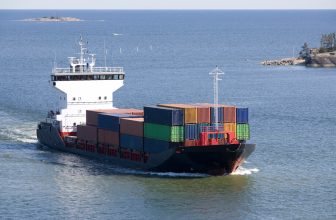
Container vessel on the four-day ocean freight route between Vietnam and Singapore
2. Shipping via Singapore: Transshipment to the USA, Europe, Africa and Australia
Most customers who book Vietnam–Singapore with us are not delivering to Singapore. They are shipping further, and Singapore is where their cargo transfers to a mother vessel.
This section is for them, because the decision is not obvious and getting it wrong is expensive.
2.1 When Transshipment Beats a Direct Sailing
| Situation | Direct vessel | Via Singapore |
|---|---|---|
| LCL cargo to the USA or Europe | Few services; long wait to fill a container | More frequent consolidations; faster departure |
| Destinations with thin direct coverage (Africa, South America, smaller EU ports) | Often no direct service at all | Reachable through the mother vessel network |
| Urgent cargo needing schedule choice | Tied to one or two sailings a week | 4–5 departures to Singapore, then the earliest onward connection |
| High-volume FCL to major US West Coast ports | Usually cheaper and more reliable if a direct service exists | Rarely worth the extra handling |
The short version: transshipment buys you frequency and reach. A direct sailing buys you fewer handling points. If your destination is a major port with regular direct calls from Vietnam, take the direct service. If it is anywhere else, or if your volume is too small to wait for one, Singapore is the practical route.
2.2 The Risk Nobody Mentions Until It Happens
Every transshipment is a point where your container can be rolled — left behind because the mother vessel is full. It happens most in the weeks before Tet and during Chinese Golden Week, when space out of Asia tightens across every carrier.
A rolled container does not simply arrive on the next vessel. Mother vessel departures to long-haul destinations may be weekly, so a single roll can add seven days, and the cargo sits at a Singapore terminal accruing storage in the meantime.
The way to manage this is not to hope. We confirm space on the onward mother vessel before the cargo leaves Vietnam, not after it arrives in Singapore. If the connection looks tight, we say so at booking stage and offer the alternative — usually a different sailing date or a direct service at a higher rate — while you still have a choice.
If your final destination is the United States, see our USA–Vietnam ocean freight page. For the United Kingdom, see the Vietnam–UK route, and for Australia see Vietnam–Australia ocean freight.
3. FCL and LCL Services
3.1 LCL and Consolidation
For shipments under 15 CBM that do not fill a container, we consolidate cargo from multiple customers through our Singapore agents. You pay for the volume or weight you actually use.
Available in both directions:
- Door-to-Port — collection at the shipper’s warehouse, delivery to the destination port
- Door-to-Door — collection at origin, delivery to the consignee’s warehouse
- Port-to-Door — collection at the port, delivery to the warehouse
- Port-to-Port — port collection and port delivery
3.2 FCL
Suited to shipments above roughly 15 CBM, or cargo that needs its own container to avoid contact with other shippers’ goods. More cost-effective per unit and lower risk for large-volume cargo. All four service types above are available for FCL, in both directions.
Choosing between them on this lane. The 15 CBM rule of thumb holds reasonably well here, but the short transit changes the calculation in one respect: because the sea leg is only four to five days, LCL consolidation waiting time can be a larger share of your total lead time than the voyage itself. If your cargo is time-sensitive and sits near the crossover point, a 20′ container often delivers days earlier for a modest premium. Send us the volume and we will price both.
4. How a Shipment Runs
- Quotation request. Provide shipper and consignee details, cargo ready date, volume, shipping terms, and the loading and destination ports.
- Quotation. We return freight rates, POL/POD, estimated schedule, applicable duty and tax information, and import policy guidance for your specific commodity where relevant.
- Confirmation. Once you confirm, we proceed with the booking.
- Bill of Lading. Issued for your review and confirmation, while we arrange the destination port closest to your delivery point.
- Tracking. Continuous milestone updates, with immediate notice of any schedule change.
- Arrival notice. Issued for imports once cargo reaches the discharge port, with customs clearance and delivery available on request.
5. Carriers and Singapore Agents
We book with the major carriers serving this lane, including MCC, MSC, Yang Ming, OOCL, COSCO, Wan Hai, CMA CGM, MOL and Hapag-Lloyd.
On the ground in Singapore we work with established local partners — Hock Teoh Huat Transport, M&P International Freights, Baylink Logistics and ALPS Global Logistics among them — handling inland delivery anywhere on the island. Every booking is tracked, with immediate notification of status changes.
6. Commodities on the Vietnam–Singapore Lane
| Direction | Main categories |
|---|---|
| Vietnam → Singapore | Seafood and processed agricultural products, coffee, wooden furniture, electronic components, garments and textiles, construction materials |
| Singapore → Vietnam | Chemicals and virgin plastic resin, petroleum products, industrial machinery and equipment, high-value electronic components, medical devices, transit cargo from third countries |
Singapore’s role as a regional distribution centre means a meaningful share of southbound cargo did not originate there. Goods are consolidated in Singapore from elsewhere in the region and forwarded to Vietnam — which affects the certificate of origin you need and the duty you pay. Origin follows where the goods were produced, not where they were shipped from. If your supplier is a Singapore trading company sourcing from a third country, confirm the country of origin before booking, because ASEAN preferential treatment applies only to goods that genuinely qualify.
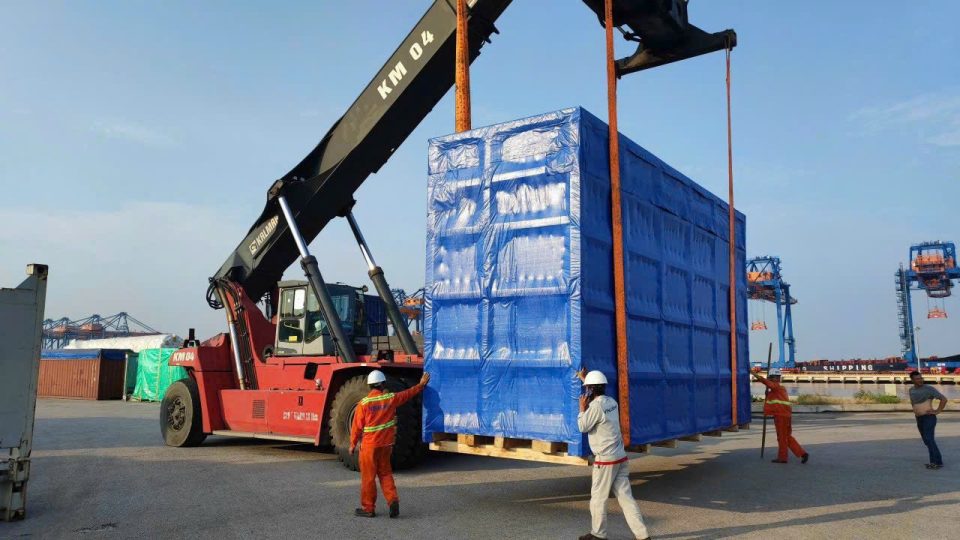
AlphaTrans container fleet loading at Cat Lai Port for the Vietnam-Singapore route
7. Why Customers Use AlphaTrans on This Lane
- Frequency you can plan around. Four to five sailings a week means a missed cut-off costs a day or two, not a week.
- Customs clearance is in-house. Our licensed brokerage files more than 10,000 declarations a month. On a four-day sea leg, clearance speed at the Vietnam end is a larger share of total transit than the voyage — so it is not something we subcontract.
- We own the trucks. 65 tractor units and 200 chassis for the Vietnam domestic leg, which matters most in the congested weeks before Tet.
- Onward connections confirmed before departure. For transshipment cargo, we secure mother vessel space before your container leaves Vietnam.
- Response within hours, not days. Our sales desk operates through the working day with quotations returned in 15 minutes for standard FCL and LCL bookings on this lane.
8. Frequently Asked Questions
Q1: How long does shipping from Vietnam to Singapore take?
Four to five days from Ho Chi Minh City, Cai Mep, Da Nang or Hai Phong. The return leg, Singapore to Vietnam, takes five to seven days. This is one of the shortest routes we operate, helped by the short distance and four to five sailings a week — waiting time for space is typically only one or two days.
Q2: Why does so much cargo bound for the USA and Europe transit through Singapore?
Singapore is Asia’s largest transshipment hub, with a mother vessel network connecting to nearly every continent. Our full route network is listed on the international sea freight services page. For destinations without frequent direct service from Vietnam, or for LCL cargo that would wait a long time for a direct consolidation, routing through Singapore is faster overall despite the extra handling.
Q3: Can my cargo be rolled at Singapore, and what happens if it is?
Yes — if the mother vessel is full, containers can be left for a later sailing. This is most common before Tet and during Golden Week. Because long-haul departures may be weekly, a roll can add around seven days plus terminal storage. We confirm onward space before cargo leaves Vietnam specifically to avoid this, and we tell you at booking stage if a connection looks tight.
Q4: Can you ship volumes under 15 CBM?
Yes, through LCL consolidation. You pay only for the volume you use, with no need to book a full container. Note that on a lane this short, consolidation waiting time can exceed the sea transit — if timing is critical, ask us to compare LCL against a 20′ container before you decide.
Q5: Does AlphaTrans have agents in Singapore?
Yes. We work with several established Singapore partners for inland transport and delivery anywhere on the island, in both directions.
Q6: Do goods shipped from Singapore qualify for ASEAN preferential duty into Vietnam?
Only if they genuinely originate in an ASEAN member state and are supported by a valid Form D certificate of origin. Because Singapore functions as a regional distribution hub, a significant volume of cargo shipped from Singapore was produced elsewhere and does not qualify. Confirm the country of origin with your supplier before booking — the shipping origin and the customs origin are not the same thing, and assuming otherwise is a common and costly error.
Q7: What documents do I need for this route?
Commercial invoice, packing list and bill of lading as standard. Add a Form D certificate of origin if claiming ASEAN preferential duty, phytosanitary or health certificates for agricultural and food products, and an MSDS for chemicals or dangerous goods. We send a checklist specific to your HS code before booking.
9. Get a Vietnam – Singapore Quote in 15 Minutes
Send us four things and we will return a complete quotation: