The United Kingdom is one of Vietnam’s largest trading partners in Europe. Since the UK–Vietnam Free Trade Agreement (UKVFTA) took effect in 2021, carrying forward the substance of the EVFTA, two-way trade has grown steadily and so has demand for reliable ocean freight between the two countries.
This is a long lane — 33 to 51 days depending on direction and port pair — which changes what matters. On a four-day route to Singapore, a documentation error costs you a day. On this route, an error found at destination costs you a month. AlphaTrans handles the UK corridor with that reality in mind: the paperwork is checked before the vessel sails, not after it arrives. The lane sits within our wider international sea freight services, with customs clearance in Vietnam handled in house.
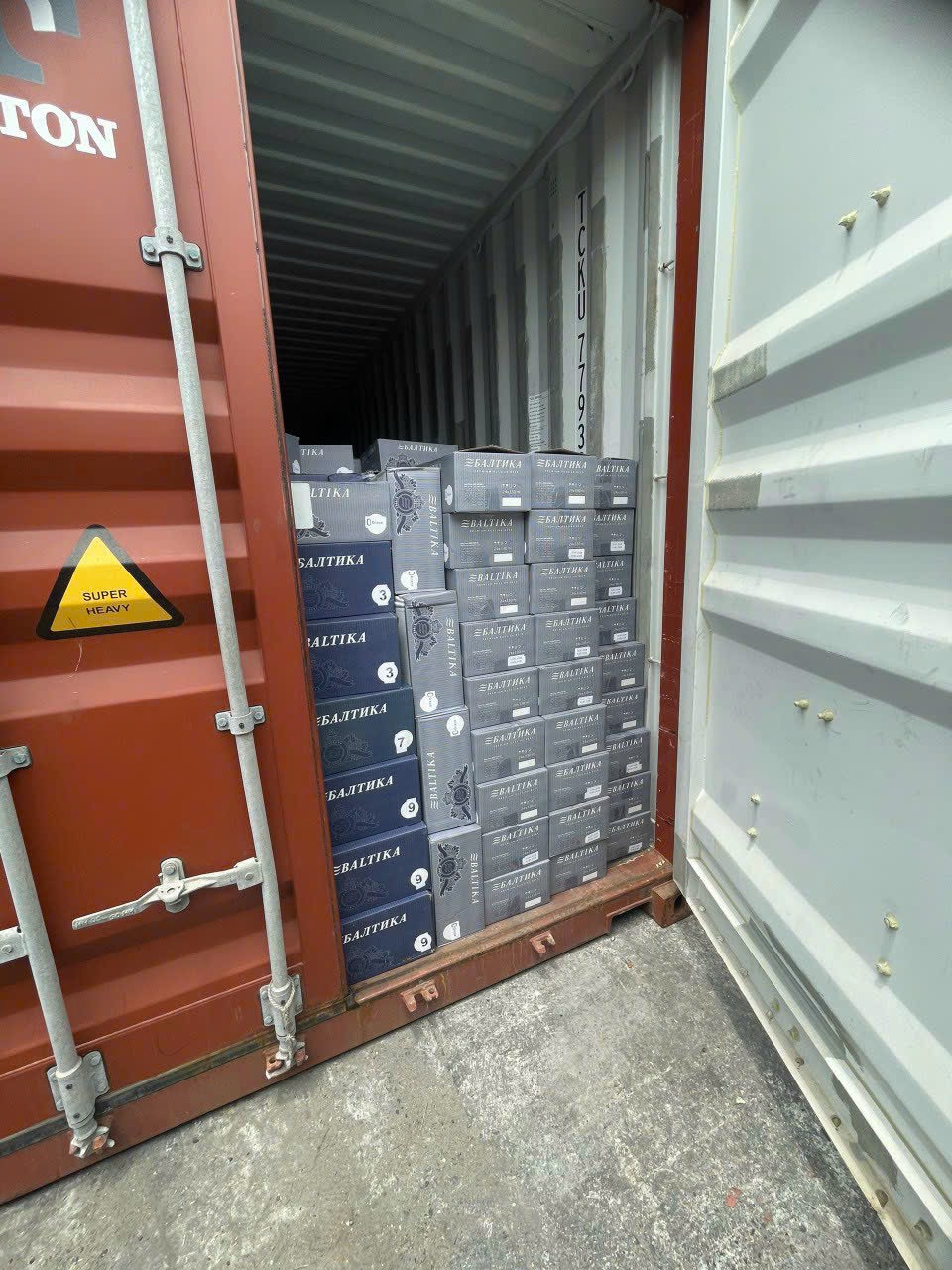
AlphaTrans container truck fleet handling UK export cargo at Cat Lai Port
1. Transit Times
1.1 Vietnam to the UK
| Route | Estimated transit |
|---|---|
| Da Nang – Southampton / Felixstowe / London | 33–43 days |
| Hai Phong – Southampton / Felixstowe / London | 35–45 days |
| Ho Chi Minh City – Southampton / Felixstowe / London | 37–42 days |
1.2 UK to Vietnam
| Route | Estimated transit |
|---|---|
| Southampton / Felixstowe / London – Da Nang | 37–49 days |
| Southampton / Felixstowe / London – Ho Chi Minh City | 39–47 days |
| Southampton / Felixstowe / London – Hai Phong | 41–51 days |
Transit times are port-to-port references and vary with sailing schedule, transshipment connections, weather and port conditions. Contact us for the current weekly schedule.
Why the northbound leg is slower. Cargo from the UK to Vietnam almost always transships — commonly at Singapore, Port Klang or a Middle East hub — and each transfer adds handling time and the possibility of waiting for onward space. Southbound cargo from Vietnam more often catches a direct or single-transshipment service to North Europe. Plan for the UK-to-Vietnam direction taking roughly a week longer than the reverse.
What this means for your booking. On a lane where transit ranges span ten days or more, promising a precise arrival date is not credible. We quote a realistic window and update it at each milestone. If your delivery date is fixed — a retail season, a production line restart — tell us at quotation stage and we will work backwards from it rather than forwards from the sailing.
2. EUR.1 and Preferential Duty Under UKVFTA
This is the section that decides your landed cost, and it is where most shipments on this lane lose money unnecessarily.
Under UKVFTA, most goods traded between Vietnam and the UK qualify for reduced or zero import duty — but only if origin is properly evidenced. Without valid proof, the shipment clears at the standard rate, and the difference is often several percent of cargo value.
2.1 How Origin Is Evidenced
The agreement provides for both a EUR.1 movement certificate, issued by an authorised body, and a self-certification mechanism, in which the exporter declares origin on the invoice or another commercial document.
Which route applies depends on the direction of trade and the value of the consignment. Broadly:
- Vietnamese exports to the UK — for consignments under the value threshold set in the agreement, exporters may self-certify origin. Above that threshold, origin must be certified through a body authorised by the Ministry of Industry and Trade.
- UK imports into Vietnam — for consignments under the threshold, the exporter may self-certify. Above it, only exporters meeting the registered-exporter eligibility requirements may self-certify.
The value threshold and the operational detail of the self-certification mechanism have been amended since the agreement took effect. Confirm the current threshold and procedure with us, or with the Ministry of Industry and Trade, before your supplier issues documentation — this is not a detail to assume from an older guide.
2.2 The Timing Problem Specific to This Lane
Here is the practical trap. If your UK supplier has not obtained EUR.1 or issued a valid origin declaration before the goods leave, obtaining it retrospectively takes weeks. On a 40-day transit, that sounds survivable — but the container still arrives on schedule, and it then sits at a Vietnamese terminal accruing demurrage while the paperwork catches up.
We send an origin documentation checklist to the UK supplier as soon as a booking is confirmed, before the cargo is collected. It is a small step that removes the most expensive failure mode on this route.
2.3 Beyond UKVFTA
Some shipments may fall under the UK’s Developing Countries Trading Scheme (DCTS), which replaced the UK’s Generalised Scheme of Preferences in June 2023. DCTS operates on different eligibility rules and different rates from UKVFTA preference, and for certain goods one route delivers a better outcome than the other.
We compare both against your specific HS code and tell you which produces the lower duty for that shipment, rather than defaulting to whichever is more familiar. For other European lanes, see our Germany route page.
3. FCL and LCL Services
3.1 LCL and Consolidation
For shipments under roughly 15 CBM, we consolidate cargo from multiple customers through our UK agent, so you pay only for the volume or weight you actually use — a meaningful saving against booking a full container for a part load.
Available in both directions:
- Door-to-Port — collection at the shipper’s warehouse, delivery to the destination port
- Door-to-Door — collection at origin, delivery to the consignee’s warehouse
- Port-to-Door — collection at the port, delivery to the warehouse
- Port-to-Port — port collection and port delivery
3.2 FCL
Suited to shipments above roughly 15 CBM, or cargo that needs its own container to avoid contact with other shippers’ goods. All four service types are available for FCL, in both directions.
Choosing between them on a long lane. The 15 CBM rule of thumb applies, but weigh one additional factor: LCL cargo is handled more times — into a CFS at origin, out at destination, and at any transshipment point. Over a 40-day journey with one or two transfers, that is more exposure to damage and delay than a sealed container experiences. For fragile or high-value goods sitting near the crossover point, FCL is often worth the premium on this route even when LCL prices lower.
4. Export and Import Procedures
The procedure depends on the Incoterm agreed between shipper and consignee. The three most common arrangements on this lane:
| Incoterm | Who pays ocean freight | What AlphaTrans handles |
|---|---|---|
| FOB — most common for Vietnamese exports | UK buyer | Haulage to port, Vietnamese export clearance, loading, bill of lading |
| CIF / CFR | Vietnamese seller | All of the above, plus carrier booking and cargo insurance |
| EXW / DDP | Varies by direction | Full door-to-door including customs clearance at both ends via our UK agent |
We advise on the appropriate process at quotation stage based on the term you are working under, including EXW, FOB, CIF, DAP and DDP.
For imports from the UK into Vietnam, the decisive moment is before the goods leave the UK warehouse. Origin documentation, packaging compliance and commodity-specific licensing all need to be settled at that point. Fixing any of them after departure means the correction and the container arrive in the wrong order.
5. Commodities on the Vietnam–UK Lane
| Direction | Main categories |
|---|---|
| Vietnam → UK | Garments, footwear and textile components, seafood and processed agricultural products, wooden furniture and wood products, plastic products, electronics and components |
| UK → Vietnam | Manufacturing machinery and equipment, pharmaceuticals and chemicals, precision instruments, spirits and beverages, automotive components |
Note that food, beverage and pharmaceutical shipments in either direction carry additional regulatory requirements beyond standard customs documentation — health certificates, product registration, and labelling compliance among them. These are commodity-specific and worth confirming before you agree delivery dates with your counterparty.
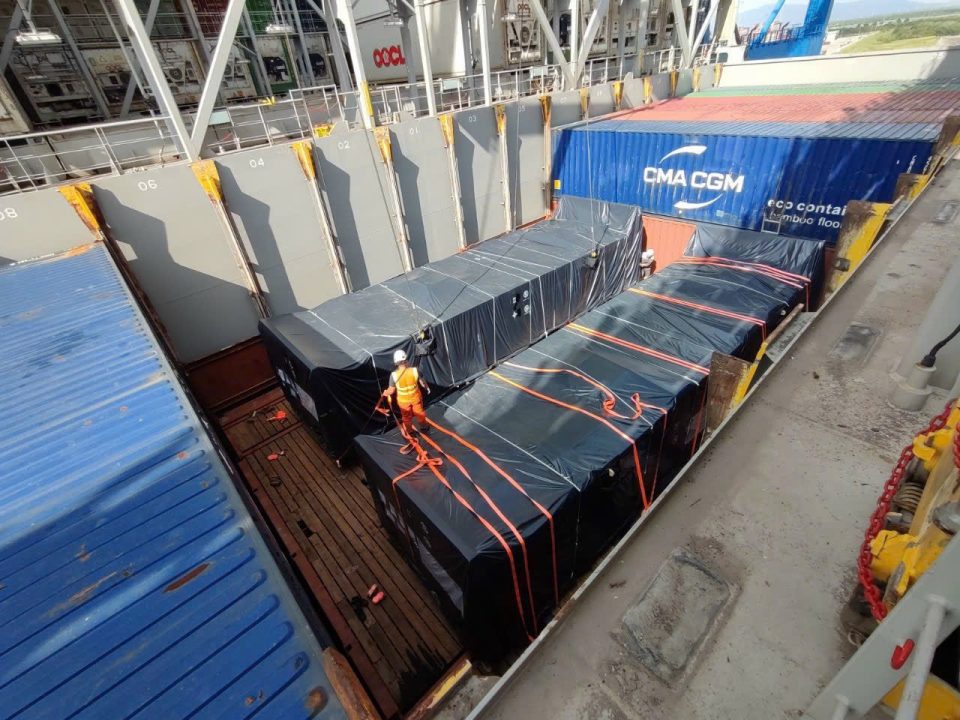
Container vessel discharging ocean freight from Vietnam at Felixstowe Port UK
6. Why Customers Use AlphaTrans on This Lane
- Documents get checked at booking, not at the port. On a 33 to 51 day transit, a certificate caught late means the container sits accruing storage while it’s reissued — we run the check while there’s still time to fix it for free.
- Our brokerage files the declaration — nobody else’s. Over 10,000 a month across Cat Lai, Cai Mep, Hai Phong and Da Nang, so a query goes straight to the person who handled your shipment.
- The trucks moving your cargo in Vietnam are ours. 65 tractor units, 200 chassis — no competing for subcontracted capacity in the weeks before Tet, when it gets scarce and expensive across the market.
- We tell you the real delivery window, then keep you posted. A 33–51 day range isn’t a shrug — it’s an honest reflection of transshipment variability, and we update you at each milestone instead of going quiet after booking confirmation.
- One provider for the full chain. Exports from Vietnam and imports from the UK, including inland haulage at both ends, customs clearance and final delivery — under one invoice.
- Full route network. Beyond the UK, our complete lane coverage lives on the international sea freight services page — including China, Singapore and Germany, among other markets.
7. Frequently Asked Questions
Q1: How long does ocean freight between Vietnam and the UK take?
Vietnam to the UK: 33 to 45 days depending on the loading port, with Da Nang typically fastest and Hai Phong slowest. UK to Vietnam: 37 to 51 days, longer because northbound cargo almost always transships. Because the range is wide, we recommend booking at least three weeks ahead of your required delivery date.
Q2: How do I qualify for reduced import duty when trading with the UK?
Through valid proof of origin under UKVFTA — either a EUR.1 movement certificate or a self-certification declaration, depending on the direction of trade and the consignment value. Confirm the current value threshold before your supplier issues documentation, as the rules have been amended since the agreement began. We prepare and check this alongside the shipment.
Q3: What happens if the EUR.1 is missing or incorrect when the cargo arrives?
The shipment clears at the standard duty rate rather than the preferential one. Depending on the jurisdiction and timing, a refund may be claimable once valid proof of origin is presented, but the cargo will normally sit until duty is paid or a guarantee lodged — accruing demurrage in the meantime. Verifying origin documentation before departure avoids the situation entirely.
Q4: Does the UK still use GSP for Vietnamese goods?
No. The UK replaced its Generalised Scheme of Preferences with the Developing Countries Trading Scheme (DCTS) in June 2023. DCTS has different eligibility criteria and rates from UKVFTA preference, and for some commodities one delivers a better result than the other. We compare both against your HS code.
Q5: Can you ship volumes under 15 CBM?
Yes, through LCL consolidation — you pay only for the volume you use. On this lane, bear in mind that LCL cargo is handled more times over a long transit with transshipment, so for fragile or high-value goods near the crossover point, ask us to price a 20′ container as well.
Q6: Do you offer door-to-door service in both directions?
Yes. We handle exports from Vietnam to the UK and imports from the UK to Vietnam, including inland trucking at both ends, customs clearance and final delivery to the warehouse.
Q7: Which UK port should I use?
Felixstowe and Southampton handle the majority of deep-sea container traffic and generally offer the best schedule frequency from Asia. London Gateway is an option depending on your consignee’s location. The right choice depends less on the port itself than on where the cargo goes afterwards — we quote the UK inland leg alongside the ocean freight so you can compare delivered cost rather than port-to-port rate.
8. Get a Vietnam – UK Quote in 15 Minutes