Taiwan is one of Vietnam’s top five trading partners and a major source of FDI into Vietnamese electronics and manufacturing — which makes it easy to assume the lane runs on the same preferential terms as Vietnam’s other major Asian trading partners. It doesn’t.
There is no free trade agreement between Vietnam and Taiwan, and none of the ASEAN or regional agreements Vietnam holds with China, Korea or Japan extend to Taiwan either. Every shipment on this lane clears at standard MFN rates in both directions — a fact that regularly surprises shippers used to sourcing from Korea or China, where a certificate of origin can cut duty to zero.
AlphaTrans runs this corridor with in-house customs clearance at every major Vietnamese port and our own trucking fleet for the domestic leg.
1. Sailing Schedules
| Direction | Loading ports | Discharge ports | Transit | Sailing days |
|---|---|---|---|---|
| Vietnam → Taiwan | Cat Lai (HCMC), Cai Mep | Kaohsiung | 3–5 days | Mon, Wed, Fri |
| Vietnam → Taiwan | Cat Lai (HCMC), Cai Mep | Taichung | 4–6 days | Tue, Sat |
| Vietnam → Taiwan | Hai Phong | Kaohsiung / Keelung | 3–4 days | Wed, Sun |
| Vietnam → Taiwan | Da Nang | Kaohsiung | 3–5 days | Thu |
| Taiwan → Vietnam | Kaohsiung / Taichung / Keelung | Cat Lai, Cai Mep, Hai Phong, Da Nang | 3–6 days | Mon, Thu, Sat |
Schedules are references and vary with carrier rotation, weather and terminal conditions. Contact us for the current weekly sailing schedule.
2. FCL and LCL Rates
2.1 Indicative Rates
| Service | Hai Phong | HCMC / Cai Mep |
|---|---|---|
| LCL (per CBM, incl. THC) | 28 – 42 USD | 32 – 48 USD |
| FCL 20’DC | 320 – 480 USD | 380 – 550 USD |
| FCL 40’HC | 500 – 720 USD | 580 – 820 USD |
Rates last reviewed July 2026. Ocean freight only — destination local charges are quoted separately. Contact us for a live itemised quote.
2.2 Service Types
Full Door-to-Door puts pickup, both customs clearances and final delivery under one invoice — the option most shippers on a no-FTA lane choose, since duty calculation and payment sit inside our process rather than something you manage separately at the Taiwan end. Door-to-Port, Port-to-Door and Port-to-Port are available where you or your counterpart already handle customs and inland transport on one side.
FCL suits shipments above roughly 15 CBM. LCL covers 1 to 15 CBM through weekly consolidation via our Taiwan partner CFS in Kaohsiung.

LCL and Consolidation sea freight from Taiwan to Vietnam
3. No FTA on This Lane: What That Means for Your Landed Cost
This is the detail that catches shippers moving from an ASEAN or Korea/China sourcing pattern to Taiwan.
No Form D, no Form E, no Form AK — because there’s no agreement to issue them under. Vietnam and Taiwan trade purely on MFN terms. Your Vietnamese import duty is calculated on the standard tariff schedule for the HS code, with no certificate of origin available to reduce it, in either direction.
What this means practically:
- Budget the full MFN rate into your landed cost from the start — don’t assume a certificate will appear later to bring it down.
- There’s no equivalent of the “check both agreements” comparison we run on lanes like Korea or Australia, because there’s only one rate to check.
- Anti-dumping or safeguard duties, where they apply to a specific HS code, sit on top of the standard rate with nothing to offset them.
The upside: paperwork is simpler. There’s no certificate to draft, verify or risk getting rejected at the port — one less document that can go wrong on a lane where the sea leg itself is only 3–6 days.
4. Choosing Your Taiwan Port: Kaohsiung, Taichung or Keelung
Kaohsiung, in southern Taiwan, handles the large majority of the island’s container volume and offers the highest sailing frequency from Vietnam. It’s the default choice unless your cargo has a specific reason to go elsewhere.
Taichung, in central Taiwan, sits beside a significant electronics and semiconductor manufacturing base — Taichung’s science park cluster. For cargo moving directly to or from factories in that belt, a Taichung discharge can mean a shorter inland leg than routing everything through Kaohsiung.
Keelung, in the north, serves the Taipei metropolitan area. Its container throughput has shifted somewhat toward the newer Taipei Port in recent years, and sailing frequency from Vietnam is lower than to Kaohsiung — worth checking against your cargo ready date before assuming it’s the fastest route to northern Taiwan.
The general rule: match the port to where your factory or consignee actually sits. Kaohsiung’s frequency advantage often outweighs the inland trucking cost of a short domestic transfer, but for cargo based directly in the Taichung or Taipei corridors, a local discharge port removes that transfer entirely. We compare options against your delivery address at quotation stage.
5. How a Shipment Runs
- Quotation. Commodity, HS code, volume, dimensions, weight, Incoterms and cargo ready date.
- Duty estimate. Since no FTA applies, we confirm the MFN rate for your HS code upfront so it’s built into your cost from the quotation stage, not discovered at clearance.
- Booking. Space confirmed against your cargo ready date and chosen discharge port.
- Collection and export clearance. From your factory or our CFS, cleared by our own licensed brokerage.
- Transit and tracking. Milestone updates through departure and arrival.
- Import clearance and delivery. Filed by our brokerage in Vietnam, or by our Taiwan partner for inbound shipments, with final delivery by our own fleet on the Vietnamese side.
6. Commodities on the Vietnam–Taiwan Lane
| Direction | Main categories |
|---|---|
| Vietnam → Taiwan | Garments, footwear and textiles, seafood and processed agricultural products, wooden furniture, coffee and cashews, plastic products |
| Taiwan → Vietnam | Electronic components and semiconductors, machinery and precision equipment, plastic resin and chemicals, textile inputs and raw fabric, bicycle and auto parts |
Taiwan’s role as a major electronics and semiconductor supplier to Vietnam’s assembly plants means a significant share of northbound volume is high-value, precision cargo — worth flagging at quotation stage if your shipment needs specific handling or insurance beyond standard cargo cover.
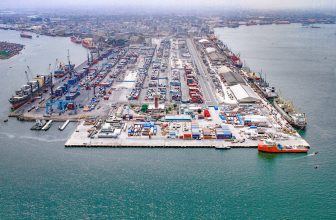
Container vessel loading ocean freight at Kaohsiung Port Taiwan
7. Why Customers Use AlphaTrans on This Lane
- We calculate the real MFN duty before you commit, rather than leaving you to discover the landed cost only after the cargo has cleared.
- Customs declarations go through our own licensed team — over 10,000 filed a month across Cat Lai, Cai Mep, Hai Phong and Da Nang, so the person who filed yours is the one who answers if there’s a query.
- The Vietnam-side fleet is ours: 65 tractors, 200 chassis. No subcontracted trucking to compete for capacity, which matters most in the weeks before Tet.
- Full route network. Beyond Taiwan, our complete lane coverage is on the international sea freight services page, including China, Korea, Japan and the USA — another lane with no FTA, where we run the same upfront duty-check approach.
8. Frequently Asked Questions
Q1: How long does ocean freight between Vietnam and Taiwan take?
3–5 days to Kaohsiung from Southern Vietnam, 3–4 days from Hai Phong. Taichung and Keelung typically add a day or two due to lower sailing frequency. Add 1–2 days for customs clearance and delivery on a door-to-door basis.
Q2: Is there a free trade agreement between Vietnam and Taiwan?
No. Unlike the China or Korea lanes, where a certificate of origin can bring duty to 0%, Vietnam–Taiwan trade runs entirely on standard MFN rates in both directions. Budget the full duty rate into your landed cost from the outset.
Q3: Which Taiwan port should I use?
Kaohsiung offers the highest sailing frequency and suits most general cargo. Taichung is worth considering if your factory sits in the central Taiwan electronics manufacturing belt. Keelung serves the Taipei area but at lower frequency than Kaohsiung — we compare all three against your delivery address before booking.
Q4: What documents do I need for this lane?
Commercial Invoice, Packing List and Bill of Lading as standard. Since there’s no FTA to claim preference under, there’s no certificate of origin to prepare — one less document on the checklist compared with ASEAN or Korea lanes.
Q5: Can you ship semiconductor or high-value electronics from Taiwan?
Yes — this is a substantial share of northbound cargo on this lane. We advise on appropriate insurance and handling for high-value shipments and can arrange dedicated security measures on request.
Q6: Can you ship volumes under 15 CBM?
Yes, through LCL consolidation via our partner CFS in Kaohsiung, with weekly departures in both directions.
Q7: Do you handle dangerous goods or chemicals on this lane?
Yes, with IMDG-classed documentation and compliant packaging arranged before booking.
Q8: Which Vietnamese port should I use for the shortest transit?
Hai Phong and Da Nang both post competitive transit times to Kaohsiung. If your factory is in Southern Vietnam, weigh the marginal transit difference against the inland trucking cost of moving cargo to a northern port — we quote both legs together for comparison.
9. Get a Vietnam – Taiwan Quote in 15 Minutes