Sea freight from Vietnam to the Czech Republic takes roughly 42 to 52 days door to door — about 38 to 45 days by sea to a European gateway port on current routing, plus 3 to 6 days by rail to a Czech inland terminal. AlphaTrans handles FCL and LCL in both directions, prepares EUR.1 documents for EVFTA duty relief, and arranges T1 transit so clearance happens in the Czech Republic rather than at the seaport.
The Czech Republic is landlocked. Every container arrives through a port in Germany, the Netherlands, Belgium, Slovenia or Poland and continues inland by rail. Two decisions drive your cost and transit time, and neither is the ocean freight rate: which gateway port, and where you clear customs.
Table of Contents
1. How Cargo Reaches The Czech Republic
1.1 Gateway ports
| Range | Port | Rail distance to Prague |
|---|---|---|
| North Range | Hamburg (DEHAM) | ~700 km |
| Bremerhaven (DEBRV) | ~750 km | |
| Rotterdam (NLRTM) / Antwerp (BEANR) | ~900 km | |
| Adriatic | Koper (SIKOP) / Trieste (ITTRS) | ~800–850 km |
| Baltic | Gdańsk (PLGDN) / Gdynia (PLGDY) | ~700–720 km |
Hamburg carries the largest share of Czech container volume and has the densest rail service. Koper grew as an Asia gateway because it sits closer to Asia by sea. Gdańsk suits northern Moravia and Silesia.
1.2 Czech inland terminals
Praha-Uhříněves (Prague and Central Bohemia, the largest) · Ostrava-Paskov (Moravia-Silesia) · Česká Třebová (central rail hub) · Plzeň (West Bohemia) · Brno (South Moravia, closest to the Adriatic corridor) · Mělník (Elbe river port).
The inland leg is rail, not river. Elbe barge service to Mělník exists but is unreliable because of low water levels. Container movement runs on rail — Metrans, ČD Cargo and Rail Cargo Group. Any quotation describing “inland waterway” is describing a mode you will probably not use.
Load ports in Vietnam: Cat Lai / HCMC (VNSGN), Cai Mep – Thi Vai (VNCMT), Hai Phong (VNHPH), Da Nang (VNDAD).

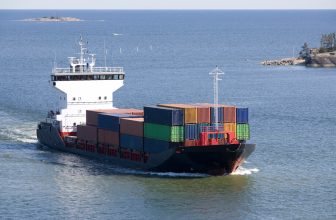
Container vessel transporting cargo from Vietnam to the Czech Republic via a European seaport
2. Transit Times
Sea leg to the gateway port
| Gateway | Via Cape of Good Hope (current default) | Via Suez (selected services) |
|---|---|---|
| Hamburg / Bremerhaven | 38–46 days | 28–34 days |
| Rotterdam / Antwerp | 38–45 days | 28–33 days |
| Koper / Trieste | 42–50 days | 25–31 days |
| Gdańsk / Gdynia | 40–48 days | 31–37 days |
Rail leg to a Czech terminal: 3–6 days from any of the above. Add clearance and final trucking to the consignee.
Ranges depend on the service, transshipment connections, terminal congestion and rail slot availability. Contact us for current schedules against your cargo ready date.
2.1 Koper or Hamburg? The answer changed
Under normal Suez routing, Koper is the faster gateway from Asia — five to seven days saved, because vessels discharge in the Mediterranean instead of sailing around Iberia to the North Sea.
Cape of Good Hope routing reverses this. A vessel coming around Africa sails north through the Atlantic. Hamburg, Rotterdam and Antwerp are on that path. Koper requires re-entering the Mediterranean through Gibraltar and crossing its full length — adding days rather than saving them.
Since late 2023 most carriers have avoided the Red Sea and used the Cape. Some services returned to Suez during 2026, but the Cape remains the default on most Asia–North Europe strings.
What this means: the gateway that was right in 2023 may be wrong today, and may switch back. We check the actual service routing before recommending one.
3. Where You Clear Customs — And Why It Affects Cash Flow
Option A — clear at the gateway port. Duty and import VAT are assessed in Germany, the Netherlands or Slovenia, then the goods move to the Czech Republic as an intra-EU movement.
Option B — move under T1 transit and clear in the Czech Republic. The container travels sealed from the seaport to a Czech inland terminal with duty and VAT suspended, and clears there.
Option B usually wins. When goods are released for free circulation in the Czech Republic, import VAT is self-assessed on the importer’s VAT return rather than paid in cash at clearance. The importer declares output VAT and claims input VAT on the same return, so for a fully taxable business the cash effect is neutral. Clearing at a foreign seaport generally means paying VAT there and recovering it later — or registering for VAT in that country.
Conditions: the importer must be Czech VAT-registered, goods must be released for free circulation in the Czech Republic, and transit documentation must be correct. This works cleanly for FCL, which moves as a sealed unit; LCL is usually deconsolidated at the gateway port, so clearance happens there by default.
Your consignee’s tax adviser should confirm their position — but if they have never been offered Option B, it is worth raising.
Czech import basics: EORI number required · import VAT 21% on customs value plus duty · duty and VAT assessed in CZK, not euro, at the customs exchange rate · Celní správa is the customs authority.
4. Duty: Getting To Zero Under EVFTA
Under the EU-Vietnam Free Trade Agreement, most tariff lines on Vietnamese exports have been eliminated or are deep into their staging schedule — but only against a valid proof of origin.
| Shipment value | Proof of origin |
|---|---|
| Under €6,000 | Exporter self-certifies with a statement on the commercial invoice |
| Over €6,000 | EUR.1 Certificate of Origin from an authorised body — in Vietnam, MOIT or an authorised chamber of commerce |
| EU → Vietnam | EU exporters use a statement on origin under the REX system, not EUR.1 |
The mistake that costs the most: submitting a Form A (GSP) certificate out of habit. It is not interchangeable with EUR.1 under EVFTA, and the rejection happens at EU customs after the cargo has landed, when demurrage is already running.
One wrinkle on this lane: where goods move under T1 through Germany or Slovenia before clearing in the Czech Republic, the origin documentation must survive transit intact and be presented at the Czech clearance point. Direct-transport and non-manipulation rules apply.
If you ship coffee, rubber, wood or furniture: the EU Deforestation Regulation applies from 30 December 2026 (large and medium operators). Your EU buyer files the due diligence statement, but they cannot file it without plot-level geolocation data from your supply chain. Coffee is a major Vietnamese export on this lane — start collecting the data now.
If you ship steel, aluminium, cement or fertiliser: CBAM’s definitive regime started 1 January 2026. Your EU buyer needs verified embedded emissions data from you.
Check your rate: Access2Markets shows the preferential rate and origin rule by HS code.
5. FCL Or LCL
| LCL | FCL | |
|---|---|---|
| Volume | Under ~15 CBM | Over ~15 CBM |
| Transit | Longer — two deconsolidation points on this lane | Faster, sealed to the inland terminal |
| Customs | Usually cleared at the gateway port | Can clear inland under T1 (see Section 3) |
| Handling | Higher | Lower |
Equipment: 20’/40′ dry, 40′ high cube, reefer, flat rack, open top, tank. Project and breakbulk handled separately.
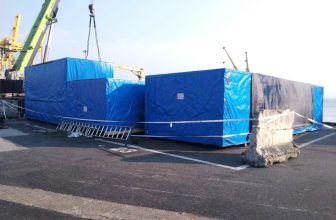
One constraint specific to landlocked destinations: Central European rail has loading gauge limits. Out-of-gauge cargo that ships fine to a seaport may not move onward by rail without special arrangement. Tell us the dimensions early.

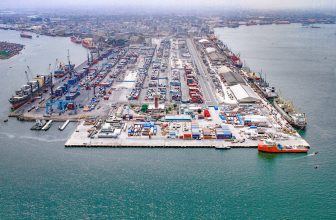
International sea freight service from Vietnam to the Czech Republic
6. Two Cost Traps On This Lane
Container detention. The clock starts at discharge at the gateway port, not on arrival in the Czech Republic. Five days on rail plus clearance can consume most of your free days before the container reaches the consignee. Ask what free time your booking carries and where it is measured from.
Rail slot availability. In peak season containers sit at Hamburg or Koper waiting for a slot. That is port storage plus detention — real cost that never appears in an ocean freight quotation.
A rate that looks materially cheaper than the market usually has one of these lines missing.
7. Documents Required
Commercial invoice · packing list · bill of lading · HS code and detailed cargo description · proof of origin (EUR.1 or invoice declaration) · T1 transit document where clearing inland · VGM for every packed FCL container · SDS for chemicals · phytosanitary, fumigation or conformity certificates where the commodity requires them.
On VGM: under SOLAS the shipper must declare verified gross mass before loading. No VGM, no loading — and on this lane a rolled container means waiting a week.
On descriptions: keep them specific and identical across every document. Generic entries like “parts” or “samples” invite inspection, and under T1 transit an inconsistency can hold the container at the seaport before it ever reaches Czech customs.
8. Why Customers Choose AlphaTrans For This Route
- We treat the gateway choice as the real decision — on a landlocked destination, the wrong corridor costs more than any freight rate difference, and in 2026 the right answer has changed
- Compliance checked before booking — on a 45-day lane, a document problem found at Hamburg is a six-week-old problem
- In-house licensed customs brokers for Vietnam-side clearance, not outsourced
- Routing transparency — which service, which gateway, which corridor, and what changes if the carrier reroutes
- Seven offices across Vietnam, own fleet of 65 tractor units and 200 trailers, ISO 9001:2015 certified
Frequently Asked Questions
How long does shipping to the Czech Republic from Vietnam take? Roughly 42 to 52 days door to door on current routing — about 38 to 45 days by sea to a gateway port, 3 to 6 days rail to a Czech inland terminal, plus clearance and final delivery. Services routed via Suez cut the sea leg to around 28 to 34 days.
Does the Czech Republic have a seaport? No, it is landlocked. Cargo arrives through Hamburg, Bremerhaven, Rotterdam, Antwerp, Koper, Trieste, Gdańsk or Gdynia and continues by rail to terminals such as Praha-Uhříněves, Ostrava-Paskov, Brno or Plzeň.
Which gateway port is best — Hamburg or Koper? It depends on current routing. Under Suez routing Koper is usually five to seven days faster from Asia. Under Cape of Good Hope routing, vessels sail up the Atlantic, so Hamburg and Rotterdam are on the path while Koper requires re-entering the Mediterranean — reversing the advantage.
Can I clear customs in the Czech Republic instead of at the seaport? Yes, for FCL. The container moves sealed under T1 transit with duty and VAT suspended and clears at a Czech inland terminal. Import VAT is then self-assessed on the importer’s VAT return rather than paid in cash at clearance. The importer must be Czech VAT-registered.
Do I need a EUR.1 certificate? Only to claim preferential duty under EVFTA. Under €6,000 the exporter can self-certify on the commercial invoice; above that you need a EUR.1 from an authorised body in Vietnam. A Form A (GSP) certificate is not accepted in its place.
What is the import VAT rate in the Czech Republic? 21% on customs value plus duty, assessed in CZK at the customs exchange rate.
Can you ship small volumes under 15 CBM? Yes, through LCL consolidation — you pay only for the volume you use. Note that LCL on this lane involves two deconsolidation points and is normally cleared at the gateway port rather than inland.
9. Get A Quote For The Vietnam – Czech Republic Route
Send your cargo details, HS code and the final delivery address in the Czech Republic — that last one determines which gateway we recommend. We come back with a freight rate, the routing and inland corridor, and a note on where it makes sense to clear customs.
Also useful to know: whether your consignee is Czech VAT-registered, your Incoterm, cargo ready date, dimensions and gross weight, and any dangerous goods or temperature requirements.