Germany is Vietnam’s largest trading partner in Europe, and most of the container volume between the two countries moves through exactly two German gateways: Hamburg and Bremerhaven. If you’ve seen “Frankfurt” or “Munich” attached to a sea freight quote, worth flagging early — neither city has a seaport. Both are inland, and both are major air cargo hubs instead; if that’s where your cargo is headed, our air freight service is the right page, not this one.
For the ocean leg, AlphaTrans runs Hamburg and Bremerhaven with in-house customs clearance at every major Vietnamese port and our own trucking fleet for the domestic side.
1. Sailing Schedules
| Direction | Loading ports | Discharge ports | Transit |
|---|---|---|---|
| Vietnam → Germany | Cat Lai (HCMC), Cai Mep | Hamburg | 32–40 days |
| Vietnam → Germany | Cat Lai (HCMC), Cai Mep | Bremerhaven | 33–41 days |
| Vietnam → Germany | Hai Phong | Hamburg / Bremerhaven | 35–43 days |
| Vietnam → Germany | Da Nang | Hamburg / Bremerhaven | 32–40 days |
| Germany → Vietnam | Hamburg / Bremerhaven | Cat Lai, Cai Mep, Hai Phong, Da Nang | 32–43 days |
Transit times are port-to-port references and vary with vessel schedule, transshipment connections, weather and port conditions. Contact us for the current weekly sailing schedule.
Almost all services on this lane transship at least once, typically through a Mediterranean or Middle East hub. On a route this long, a realistic window matters more than a single promised date — we update you at each milestone rather than issuing an optimistic figure and going quiet.
2. FCL and LCL Services
2.1 Indicative Rates
| Service | Hai Phong | HCMC / Cai Mep |
|---|---|---|
| LCL (per CBM, incl. THC) | 40 – 65 USD | 35 – 58 USD |
| FCL 20’DC | 950 – 1,400 USD | 850 – 1,250 USD |
| FCL 40’HC | 1,500 – 2,100 USD | 1,350 – 1,900 USD |
Rates last reviewed July 2026. Ocean freight only — destination local charges are quoted separately. Contact us for a live itemised quote.
2.2 Service Types
Door-to-Door covers the full chain — Vietnamese pickup, both customs clearances, and delivery to the final German address, including any onward inland movement if your consignee sits away from Hamburg or Bremen. Door-to-Port, Port-to-Door and Port-to-Port are available where either side already has clearance and inland transport arranged.
FCL suits shipments above roughly 15 CBM — the more common choice on this lane given the long transit and the value of minimizing handling touches. LCL covers 1 to 15 CBM through weekly consolidation via our German partner CFS.

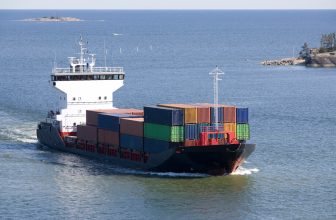
Container vessel loading ocean freight at Hamburg Port Germany
3. EVFTA and Form EUR.1: Preferential Duty on This Lane
Since the EU–Vietnam Free Trade Agreement took effect in 2020, most goods traded between Vietnam and Germany qualify for reduced or eliminated import duty — but only with valid proof of origin.
How origin is evidenced. Vietnamese exporters below a value threshold — roughly €6,000 per consignment — may self-certify origin directly on the commercial invoice. Above that threshold, origin must be certified through a body authorised under the agreement, using a Certificate of Origin Form EUR.1. Confirm the current threshold with us before your shipment is invoiced, since self-certification procedures have been refined since the agreement’s early years.
The phase-out is gradual, not immediate. Vietnam removed a majority of its duties on EU goods when the agreement took effect, with the remainder phasing out over a multi-year schedule; the EU side is on its own phase-out timeline running toward full duty-free access. This means the exact rate for your HS code can differ depending on which year of the schedule you’re shipping in — worth confirming per shipment rather than assuming last year’s rate still applies.
Rules of origin matter as much as the certificate. For textiles and garments in particular, the EVFTA generally applies a “fabric-forward” rule — the fabric must originate in Vietnam, the EU, or a small set of qualifying third countries for the finished garment to claim preference. A shipment using fabric sourced outside that list won’t qualify even with a correctly filled EUR.1.

The certificate of Origin form EVFTA (EUR1)
4. Frankfurt and Munich: Air Freight, Not Ocean Freight
Because Frankfurt (FRA) and Munich (MUC) come up often in German trade conversations, it’s worth being direct: neither is a container port, and cargo destined for either city by air moves through our air freight service, not through this ocean freight page. If your supplier or buyer operates out of the Frankfurt or Munich area, expect their goods to move overland from Hamburg or Bremerhaven by truck or rail after ocean arrival, or to fly in directly — we can quote either routing depending on your timeline and budget.
5. How a Shipment Runs
- Quotation. Commodity, HS code, volume, dimensions, weight, Incoterms and shipper/consignee details.
- Duty and origin check. We confirm whether EVFTA preference applies to your HS code and whether self-certification or a formal EUR.1 is required.
- Booking. Space confirmed against your cargo ready date.
- Collection and export clearance. From your factory or our CFS, handled by our own licensed brokerage.
- Transit and tracking. Milestone updates through departure, transshipment, and arrival — updated realistically given the length of this route.
- Import clearance and delivery. Coordinated with our German partner through to final delivery, including inland transport beyond Hamburg or Bremen where needed.
6. Commodities on the Vietnam–Germany Lane
| Direction | Main categories |
|---|---|
| Vietnam → Germany | Garments, footwear and textile components, seafood and processed agricultural products, wooden furniture, electronic components, plastic products |
| Germany → Vietnam | Machinery and industrial equipment, pharmaceuticals and chemicals, precision instruments, automotive components, medical devices |
7. Why Customers Use AlphaTrans on This Lane
- We tell you when a shipment is actually an air freight job, rather than quoting an ocean rate to a city with no port and letting you find out later.
- EVFTA eligibility is checked before invoicing, so a self-certification or Form EUR.1 decision is made correctly the first time, not corrected after the cargo has already sailed.
- Customs clearance is in-house on the Vietnamese side — over 10,000 declarations filed a month across Cat Lai, Cai Mep, Hai Phong and Da Nang, handled by the same team from quotation through delivery.
- Realistic transit windows on a long route. On a 32–43 day lane with at least one transshipment, we quote a range we can stand behind and update it at each milestone.
- Full route network. Beyond Germany, our complete lane coverage is on the international sea freight services page, including the UK and other European routes.
8. Frequently Asked Questions
Q1: How long does ocean freight between Vietnam and Germany take?
32–41 days to Hamburg or Bremerhaven from Southern Vietnam, slightly longer from Hai Phong. Almost every service transships at least once. Add 2–3 days for customs clearance and delivery on a door-to-door basis.
Q2: Is Frankfurt a sea port I can ship to?
No. Frankfurt has no seaport — it’s an inland city and one of Europe’s largest air cargo hubs. Cargo for Frankfurt moves either by air directly, or by ocean to Hamburg/Bremerhaven followed by inland trucking or rail. The same applies to Munich.
Q3: How do I qualify for reduced duty under EVFTA?
Through a valid proof of origin — self-certification on the invoice for consignments under roughly €6,000, or a Certificate of Origin Form EUR.1 above that threshold, issued through an authorised body. Confirm the current threshold with us, and note that Vietnam and the EU are each on separate multi-year duty phase-out schedules, so the applicable rate can change year to year for a given HS code.
Q4: Do garments need to meet a special rule to qualify for EVFTA preference?
Yes — generally a “fabric-forward” rule, meaning the fabric must originate in Vietnam, the EU, or a small set of qualifying countries. Garments made from fabric sourced elsewhere typically won’t qualify even with a correctly completed EUR.1.
Q5: Can you ship volumes under 15 CBM?
Yes, through LCL consolidation via our German partner CFS, though on a lane this long FCL is usually the more practical choice if your volume sits near the crossover point — fewer handling touches over a five-week voyage.
Q6: Do you handle inland delivery beyond Hamburg or Bremen?
Yes — for consignees further inland, including the Frankfurt and Munich areas, we arrange onward trucking or rail from the discharge port as part of a Door-to-Door quote.
Q7: What documents do I need for shipping to Germany?
Commercial Invoice, Packing List, Bill of Lading, and either a self-certified origin declaration or Form EUR.1 if claiming EVFTA preference. Certain machinery and chemical shipments require additional compliance documentation on the German import side — confirm with us before booking.
9. Get a Vietnam – Germany Quote in 15 Minutes