Shipping to Belgium from Vietnam currently takes 38 to 45 days to Antwerp on Cape of Good Hope routing, or 28 to 33 days on the services that have returned to the Suez Canal. AlphaTrans handles FCL and LCL in both directions, prepares EUR.1 origin documents to claim 0% duty under EVFTA, and flags EUDR and CBAM exposure before you book — not after your cargo lands.
Belgium is not just a destination. Port of Antwerp-Bruges is the second-largest container port in Europe, and a large share of the Vietnamese cargo that clears there is on its way to Germany, France or the Netherlands. That makes Belgium a customs decision as much as a freight decision — and it means the paperwork attached to your shipment matters more here than on almost any other lane we run.
This page covers the schedule, the service options, and the three EU regulations that decide whether your cargo clears cleanly: EVFTA duty relief, the EU Deforestation Regulation, and CBAM.
Table of Contents
1. Belgian Ports We Serve
| Port | UN/LOCODE | Role |
|---|---|---|
| Antwerp (Port of Antwerp-Bruges) | BEANR | Main container gateway. Second-largest container port in Europe and the default discharge port for Vietnamese cargo |
| Zeebrugge (Port of Antwerp-Bruges) | BEZEE | Coastal terminal, strong on ro-ro, reefer and UK-bound feeder traffic |
| Ghent (North Sea Port) | BEGNE | Breakbulk, project cargo, bulk and industrial goods |
| Liège | BELGG | Inland port on the Meuse, connected to Antwerp by barge — useful for cargo heading to eastern Belgium, Luxembourg or western Germany |
Antwerp and Zeebrugge merged into a single authority, Port of Antwerp-Bruges, so a booking may show either name depending on which terminal the vessel calls. For most Vietnamese shippers, Antwerp is the right answer.
Load ports in Vietnam: Ho Chi Minh City / Cat Lai (VNSGN), Cai Mep – Thi Vai (VNCMT), Hai Phong (VNHPH) and Da Nang (VNDAD). Cai Mep is worth asking about on this lane — its deep-water berths take the larger vessels used on Asia–North Europe services, which sometimes means a more direct routing than Cat Lai.

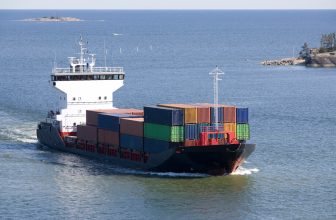
Container vessel loading for shipping to Belgium from Vietnam
2. FCL And LCL Service To Belgium
2.1 LCL and consolidation
Best for shipments under roughly 15 CBM. We consolidate your cargo with other shippers’ goods into one container, so you pay only for the space you use.
- Door-to-port — pickup at the shipper’s warehouse, delivery to Antwerp or Zeebrugge
- Door-to-door — pickup at origin, delivery to the consignee’s premises anywhere in Belgium or onward into the EU
- Port-to-door — collection at the port of loading, delivery to the destination warehouse
- Port-to-port — collection and delivery both at port
All four run in both directions.
2.2 FCL
Better once a shipment passes roughly 15 CBM, or when cargo needs to stay isolated.
- 20′ and 40′ dry containers (20’GP, 40’GP, 40’HC)
- Flat rack and open top for out-of-gauge cargo
- Reefer for food, seafood and temperature-controlled goods
- Tank containers for liquids
- Project and breakbulk handled separately through Ghent
2.3 Which one to choose
| Factor | Choose LCL | Choose FCL |
|---|---|---|
| Cargo volume | Under ~15 CBM | Over ~15 CBM |
| Cost per CBM | Lower for small volumes | Lower once the threshold is crossed |
| Transit time | Longer — consolidation and deconsolidation add days at both ends, and on a 40-day lane that matters | Faster — no consolidation step |
| Customs risk | A documentation problem on co-loaded cargo can hold the whole container | Contained to your own cargo |
| Cargo sensitivity | Shared container space | Isolated |
On a lane this long, the LCL time penalty is proportionally smaller than on an intra-Asia route — but the customs risk is higher, because EU clearance is more document-intensive than most Asian ports. If your paperwork is clean and your co-loaders’ is not, you still wait.
See also: International Sea Freight, Customs Clearance in Vietnam.

Cartons secured with lashing straps inside a container before export loading
3. Transit Times: Read This Before You Quote A Delivery Date
The Asia–Europe lane is the most disrupted trade route in the world right now, and any transit time you see quoted without a routing attached is meaningless.
Since late 2023, most container carriers have avoided the Red Sea and routed Asia–Europe services around the Cape of Good Hope, adding roughly 3,500 nautical miles and 10 to 14 days. During 2026 some services have begun returning to the Suez Canal — Maersk completed test transits, and selected Gemini and CMA CGM services resumed Suez routing — but as of mid-2026 the Cape remains the default for most Asia–North Europe strings, and carriers have said they will reverse again if conditions change.
What that means for you: the same port pair can differ by two weeks depending on which service you book. We tell customers the routing, not just the number.
3.1 Vietnam to Belgium
| Route | Via Cape of Good Hope (current default) | Via Suez (selected services) |
|---|---|---|
| Ho Chi Minh City / Cai Mep – Antwerp | 38–45 days | 28–33 days |
| Ho Chi Minh City / Cai Mep – Zeebrugge | 40–47 days | 30–35 days |
| Hai Phong / Da Nang – Antwerp | 42–50 days | 32–38 days |
3.2 Belgium to Vietnam
| Route | Via Cape of Good Hope | Via Suez |
|---|---|---|
| Antwerp – Ho Chi Minh City | 36–43 days | 27–32 days |
| Antwerp – Hai Phong | 40–48 days | 31–36 days |
Lead times are indicative and depend on the specific carrier service, transshipment connections, European port congestion and security conditions in the Red Sea corridor. Contact us for current schedules against your cargo ready date.
Two practical points. First, if carriers do return to Suez at scale, vessels routed via Suez will arrive at the same time as vessels that left earlier via the Cape, and European terminals are expected to congest sharply during that transition. Build buffer into any delivery commitment through that period. Second, Asia–Europe freight rates have carried a 25–40% premium through the disruption; if rates soften on a Suez return, it will be gradual, not immediate.
4. EVFTA: Getting Your Duty To Zero
Vietnam and the EU trade under the EU-Vietnam Free Trade Agreement (EVFTA), in force since August 2020. By 2026 most tariff lines on Vietnamese exports have been eliminated or are deep into their staging schedule — but only if you present a valid proof of origin. Without one, you pay the standard MFN rate, and the difference on textiles, footwear and furniture is substantial.
| Shipment value | Proof of origin required |
|---|---|
| Under €6,000 | The exporter may self-certify origin with a statement on the commercial invoice. No separate EUR.1 form needed |
| Over €6,000 | A EUR.1 Certificate of Origin issued by an authorised body — in Vietnam, typically the Ministry of Industry and Trade or an authorised chamber of commerce |
| EU → Vietnam direction | EU exporters use a statement on origin under the REX (Registered Exporter) system rather than EUR.1 |
The mistake that costs the most. Vietnamese exporters submit a Form A (GSP) certificate out of habit. Belgium, as an EU member, recognises EUR.1 under EVFTA — the two are not interchangeable. The rejection happens at Belgian customs, after the cargo has landed, when demurrage is already running. Nothing catches it on the Vietnam side.
AlphaTrans checks the HS code, the origin criterion and the shipment value before booking, and prepares the origin document in parallel with the space confirmation so it is ready before the vessel departs.
Check your own rate: the EU’s Access2Markets portal lets you enter your HS code and see the exact preferential rate and rule of origin for Vietnam → Belgium.
5. EUDR: The Deadline Vietnamese Exporters Need To Know About
If you export coffee, rubber, wood, furniture, cocoa or palm oil derivatives to Belgium, this section is the most important one on this page.
The EU Deforestation Regulation (EUDR), Regulation (EU) 2023/1115, applies from 30 December 2026 for large and medium operators, and 30 June 2027 for micro and small operators. It has been postponed twice; this is the current legally binding date, confirmed by Regulation (EU) 2025/2650.
What it covers: cattle, cocoa, coffee, oil palm, rubber, soy and wood — plus derived products including furniture. For Vietnam, this hits two of the country’s largest export categories to the EU directly.
What it requires. Products placed on the EU market must be deforestation-free, produced in compliance with the laws of the country of production, and covered by a due diligence statement (DDS) including geolocation data for the plots of land where the commodity was produced.
Where the obligation sits — and why it still lands on you. The legal duty falls on the EU operator placing goods on the market, not on the Vietnamese exporter. But that operator cannot file a DDS without geolocation data, and the only place that data exists is your supply chain. In practice, Belgian buyers have been writing EUDR data clauses into contracts through 2026. A Vietnamese coffee or furniture exporter who cannot supply plot-level geolocation will lose the order, not just the shipment.
What to do now, four months out:
- Map your supply chain to plot level and collect geolocation coordinates for every source
- Ask your Belgian buyer which operator is filing the DDS and what data format they need
- Check whether your product is in scope — the Commission has been amending Annex I (soluble coffee and palm oil derivatives added; cattle leather and printed matter removed), so confirm at HS code level rather than by category
- Keep records: the regulation is enforced by national competent authorities conducting unannounced checks
We are not a compliance consultancy, but we flag EUDR exposure on every booking in these commodity groups, because a container that arrives without a valid DDS behind it does not clear.
Source: European Commission — Regulation on deforestation-free products
6. CBAM: Only Relevant If You Ship Steel, Aluminium, Cement Or Fertiliser
The EU’s Carbon Border Adjustment Mechanism entered its definitive regime on 1 January 2026. The transitional reporting phase ended 31 December 2025.
In scope: cement, iron and steel, aluminium, fertilisers, electricity and hydrogen. If you ship none of these, skip this section.
Key points for a Vietnam–Belgium shipper:
- The importer in Belgium must hold authorised CBAM declarant status to import CBAM goods
- A 50-tonne annual de minimis threshold applies across cement, iron and steel, fertilisers and aluminium combined — importers below it are exempt from reporting, declaration and certificate obligations
- The first annual declaration and certificate surrender covering 2026 imports is due by 30 September 2027
- Certificates are priced against EU ETS auction clearing prices
What this means for the Vietnamese exporter. The financial obligation sits with the EU importer, but they need verified embedded emissions data from you. Producers who can supply clean, verified emissions figures have a commercial advantage over those who cannot — the buyer’s CBAM cost is directly tied to your production data. This is worth preparing before your buyer asks.
Source: European Commission — CBAM definitive regime
7. Clearing Into Belgium: Practical Notes
Belgian customs is administered by the ADDA (General Administration of Customs and Excise). Declarations are risk-channelled: green releases without inspection, orange triggers a documentary check, red triggers physical inspection. With correct documentation, clearance at Antwerp normally runs one to two business days.
- EORI number — every commercial importer needs one. A foreign company without a Belgian VAT registration and EORI cannot appear on the import declaration
- Import VAT — the standard Belgian rate is 21%, charged on CIF value plus duty
- ET 14000 licence — lets an importer defer import VAT to the periodic VAT return instead of paying at clearance. The VAT is declared and deducted on the same return, so the cash impact is neutral. It is a deferment, not an exemption, and it is not retroactive. Since 15 January 2026, applications must go through MyMinfin
- Customs procedure 42 00 — for goods entering Belgium and moving on to another EU member state, this defers import VAT to the destination country. This is one reason so much Vietnamese cargo clears in Antwerp rather than at its final destination
- Bonded warehousing — available at Antwerp for cargo that will be distributed across the EU over time, deferring duty and VAT until goods leave the warehouse
If your Belgian consignee has not set up ET 14000 or procedure 42, they are pre-financing 21% VAT on every shipment. It is worth raising with them.
8. Commodities On The Vietnam – Belgium Lane
Vietnam to Belgium
- Coffee — Belgium is a major European re-export and processing hub (EUDR in scope)
- Wooden furniture and interior products (EUDR in scope)
- Garments, footwear and textiles
- Seafood, frozen and processed (EU health certification required)
- Rubber and rubber products (EUDR in scope)
- Electronics, cables and components
- Rice, cashew, pepper and agricultural goods
Belgium to Vietnam
- Chemicals, resins and pharmaceutical ingredients
- Machinery, industrial equipment and precision instruments
- Steel and metal products
- Chocolate, dairy and premium food products
- Diamonds and specialist high-value cargo (Antwerp)
- Auto parts and components

Four IBC tanks loaded in a container for liquid chemical export from Hai Phong
9. How AlphaTrans Handles Your Shipment
- Quotation request — you send cargo details (dimensions, weight, HS code), cargo ready date, the agreed Incoterm and the port of loading and destination.
- Quotation issued — freight rate, POL/POD, the specific service and its routing, estimated schedule and applicable duty.
- Compliance review — before booking we check the HS code against EVFTA, confirm which proof of origin applies, and flag EUDR or CBAM exposure. On this lane, this step prevents more delay than anything else we do.
- Booking and document preparation — space confirmed with the carrier while the EUR.1 or invoice declaration is prepared in parallel.
- Export clearance and loading — handled by AlphaTrans where the Incoterm assigns it to the seller (FOB, CIF, CFR, DDP); otherwise the buyer’s nominated agent manages it.
- Ocean transit and tracking — cut-off, sailing date, transshipment status and expected arrival, with any routing or schedule change reported immediately rather than discovered on arrival.
- Arrival, clearance and delivery — ADDA clearance and European inland delivery, coordinated with our Belgian agent or the consignee’s nominated broker depending on terms.
10. Why Customers Choose AlphaTrans For This Route
- Compliance checked before booking, not after arrival. On a 40-day lane, a document problem discovered at Antwerp is a month-old problem. We check it while the cargo is still in Vietnam.
- In-house licensed customs brokers. Vietnam-side clearance handled by our own team, not outsourced — one less handoff, one less place for an error.
- Routing transparency. We tell you which service, which routing, and what the risk is if it changes. On Asia–Europe in 2026, that is worth more than a headline transit number.
- Our own fleet — 65 container tractor units and 200 trailers, plus yard capacity in Cu Chi (HCMC) and Binh Duong, so inland pickup runs on our schedule.
- Seven offices across Vietnam — HCMC, Hanoi, Hai Phong, Da Nang, Binh Duong, Dong Nai and Dung Quat.
- ISO 9001:2015 certified, D-U-N-S registered (557079259).
- All-in quotations — ocean freight, inland trucking and handling quoted together, with destination duty and VAT itemised separately and confirmed before booking.
Frequently Asked Questions
How long does shipping to Belgium from Vietnam take? Currently 38 to 45 days from Ho Chi Minh City to Antwerp on Cape of Good Hope routing, which most carriers still use as the default. Services that have returned to the Suez Canal run 28 to 33 days. Hai Phong and Da Nang add several days. Always confirm the routing, not just the transit number.
Why is shipping to Europe taking longer than it used to? Since late 2023, most container lines have avoided the Red Sea and routed Asia–Europe services around the Cape of Good Hope, adding roughly 3,500 nautical miles and 10 to 14 days. Some services returned to Suez during 2026, but the situation remains volatile and carriers have reversed decisions at short notice.
Do I need a EUR.1 certificate to ship to Belgium? Only if you want preferential duty under EVFTA. For shipments under €6,000 the exporter can self-certify on the commercial invoice. Above €6,000 you need a EUR.1 issued by an authorised body in Vietnam. A Form A (GSP) certificate is not accepted in place of EUR.1 and will be rejected at Belgian customs.
Does EUDR affect my shipment to Belgium? If you export coffee, rubber, wood, furniture, cocoa or palm oil derivatives, yes. The regulation applies from 30 December 2026 for large and medium operators and 30 June 2027 for micro and small operators. The due diligence statement is filed by the EU importer, but it requires plot-level geolocation data that only your supply chain can provide.
What is the import VAT rate in Belgium? 21% on CIF value plus duty. Importers holding an ET 14000 licence can defer it to their periodic VAT return rather than paying at clearance, which removes the cash-flow gap. Goods moving on to another EU country can use customs procedure 42 00 instead.
Can you ship small volumes to Belgium? Yes, through LCL consolidation — you pay only for the volume you use, with no need to book a full container. Bear in mind that on this lane consolidation and deconsolidation add days at both ends.
Is door-to-door service available in both directions? Yes, for exports to Belgium and imports from Belgium, including inland trucking at both ends, customs clearance and final delivery. Quotes cover all costs, with destination duty and VAT itemised separately.
Should I clear customs in Belgium if my goods are going to Germany or France? Often yes. Antwerp handles a large share of EU-bound cargo precisely because customs procedure 42 00 lets import VAT be deferred to the destination member state. Whether it makes sense depends on your consignee’s VAT setup — we can walk through it with you.
11. Get A Free Consultation On The Vietnam – Belgium Route
Send us your cargo details and HS code and we will come back with a freight rate, the current sailing schedule with its routing, and a note on which origin document you need — plus an EUDR or CBAM flag if your commodity is in scope.