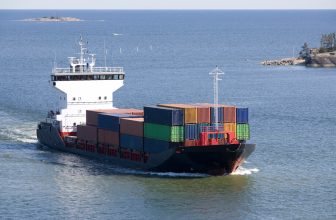
South Korea is one of Vietnam’s largest trading partners and its biggest source of FDI, and the freight moving between the two countries reflects that depth — electronics components heading one way, garments and seafood the other, on some of the shortest, most frequent sailings out of Vietnam’s main ports.
The part shippers get wrong on this lane isn’t the ocean leg. It’s the certificate. Vietnam and Korea trade under two separate free trade agreements that both apply to the same shipment, with different rules of origin and different forms — and picking the wrong one, or assuming they’re interchangeable, is a common and avoidable cost.
AlphaTrans runs this corridor with in-house customs clearance at every major Vietnamese port and our own trucking fleet for the domestic leg.
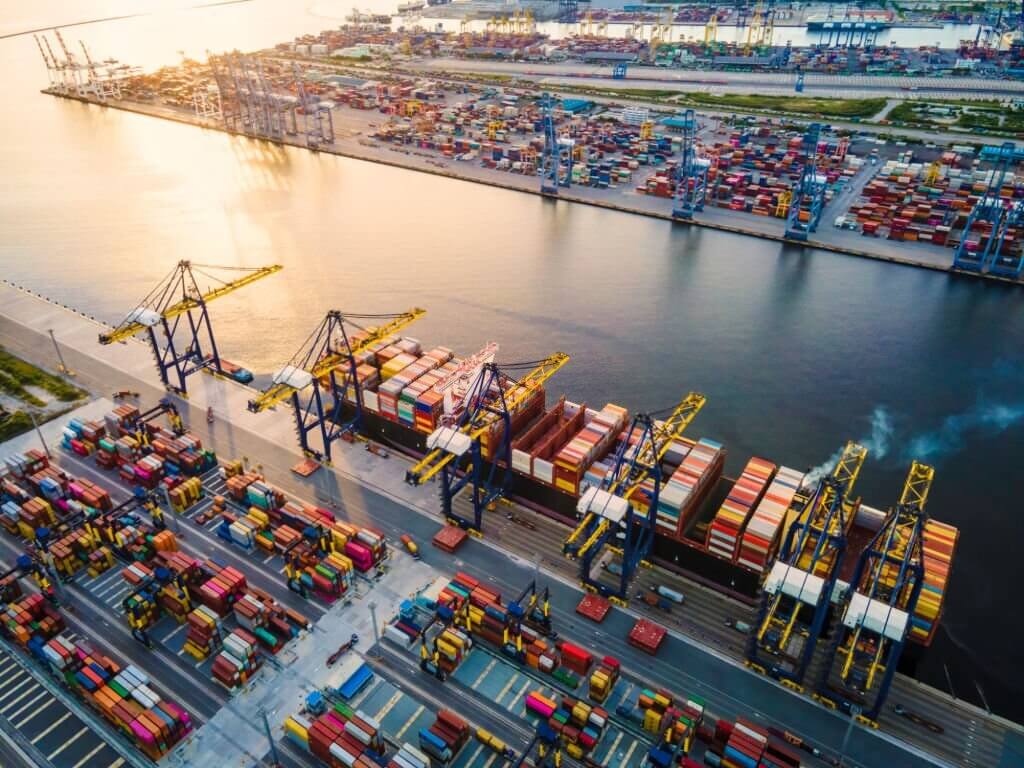
Inland container transportation in Vietnam
1. Sailing Schedules
| Direction | Loading ports | Discharge ports | Transit | Sailing days |
|---|---|---|---|---|
| Vietnam → Korea | Hai Phong | Busan | 4–6 days | Tue, Thu, Sun |
| Vietnam → Korea | Hai Phong | Incheon | 5–7 days | Wed, Sat |
| Vietnam → Korea | Cat Lai (HCMC), Cai Mep | Busan | 6–8 days | Mon, Wed, Fri |
| Vietnam → Korea | Cat Lai (HCMC), Cai Mep | Incheon | 7–9 days | Thu, Sun |
| Vietnam → Korea | Da Nang | Busan | 6–8 days | Tue, Sat |
| Korea → Vietnam | Busan / Incheon | Cat Lai, Cai Mep, Da Nang, Hai Phong | 5–9 days | Tue, Thu, Sun |
Schedules are references and vary with carrier rotation, weather and terminal conditions. Contact us for the current weekly sailing schedule.
Hai Phong sits closest to Korea’s main gateways and consistently posts the shortest transit — worth weighing against Cat Lai or Cai Mep if your factory or warehouse can reach either port without a significant cost difference on the inland leg.
2. Rate Reference and Service Options
2.1 Indicative Rates
| Service | Hai Phong | HCMC / Cai Mep |
|---|---|---|
| LCL (per CBM, incl. THC) | 25 – 40 USD | 30 – 48 USD |
| FCL 20’DC | 350 – 500 USD | 420 – 600 USD |
| FCL 40’HC | 550 – 800 USD | 650 – 950 USD |
Rates last reviewed July 2026. Ocean freight only — destination local charges are quoted separately. Contact us for a live itemised quote.
2.2 Service Types
Available for both FCL and LCL, in both directions:
- Door-to-Door — collection at origin, delivery to the consignee’s warehouse
- Door-to-Port — collection at the shipper’s warehouse, delivery to the destination port
- Port-to-Door — collection at the port, delivery to the warehouse
- Port-to-Port — port collection and port delivery
FCL suits shipments above roughly 15 CBM or cargo that shouldn’t be co-loaded. LCL covers 1 to 15 CBM through weekly consolidation via our Korean partner CFS in Busan and Incheon.
Equipment available: 20′ and 40′ dry containers, Flat Rack and Open Top for oversized machinery, and reefer containers for seafood, fresh produce and temperature-sensitive cargo — a meaningful share of southbound volume on this lane.
3. VKFTA vs. AKFTA: Two Agreements, Two Forms
Vietnam and Korea are unusual among Vietnam’s trading partners in having two overlapping preferential trade agreements running at the same time, and neither cancels the other out.
- VKFTA (the bilateral Vietnam–Korea Free Trade Agreement) uses Certificate of Origin Form KV, cuts a further set of tariff lines beyond what AKFTA covers, and generally gives deeper preferences — but its rules of origin are somewhat stricter.
- AKFTA (the ASEAN–Korea Free Trade Agreement) uses Form AK, has more lenient origin criteria in some categories, and remains the better option for products that don’t meet VKFTA’s stricter thresholds.
Neither replaces the other. Businesses are free to choose whichever agreement produces the better outcome for a specific shipment, and the right choice depends on the HS code and which rule of origin — Regional Value Content above roughly 40%, or a qualifying change in tariff classification — your product actually satisfies.
A detail worth knowing: low-value shipments carry a practical shortcut. Goods with a customs value under roughly USD 600 (FOB) are generally exempt from having to present a Certificate of Origin at all to claim preference, though this threshold and its conditions are set by the importing authority and worth confirming for your specific case rather than assumed.
We check both agreements against your HS code before booking and tell you which one — Form KV or Form AK — delivers the lower landed cost, rather than defaulting to whichever your supplier has always used.
4. How a Shipment Runs
- Quotation. Commodity, HS code, volume, dimensions, weight, Incoterms, and shipper/consignee details.
- Duty check. We compare VKFTA and AKFTA against your HS code and recommend the certificate that gives the better rate.
- Booking. Space confirmed against your cargo ready date.
- Document preparation. Form KV or Form AK drafted and checked against the invoice and packing list before finalisation.
- Collection and export clearance. From your factory or our CFS, handled by our own licensed brokerage.
- Transit and tracking. Milestone updates through departure and arrival.
- Import clearance and delivery. Filed by our brokerage in Vietnam, or by our Korean partner for inbound shipments, with final delivery by our own fleet on the Vietnamese side.
5. Commodities on the Vietnam–Korea Lane
| Direction | Main categories |
|---|---|
| Exports from Vietnam to Korea | Garments, footwear and textiles, seafood and processed agricultural products, wooden furniture, electronic components and assembled devices, coffee and cashews |
| Imports from South Korea to Vietnam | Electronic components and semiconductors, machinery and industrial equipment, plastic resin and chemicals, automotive parts, cosmetics and personal care products |
Korea’s role as a major FDI investor in Vietnam’s electronics sector means a significant share of northbound-southbound volume is intra-company — components moving into Vietnamese assembly plants, finished goods moving back out. Consistency in HS classification across repeated shipments matters more on this lane than on most others, since misalignment surfaces in a post-clearance audit rather than at the first shipment.
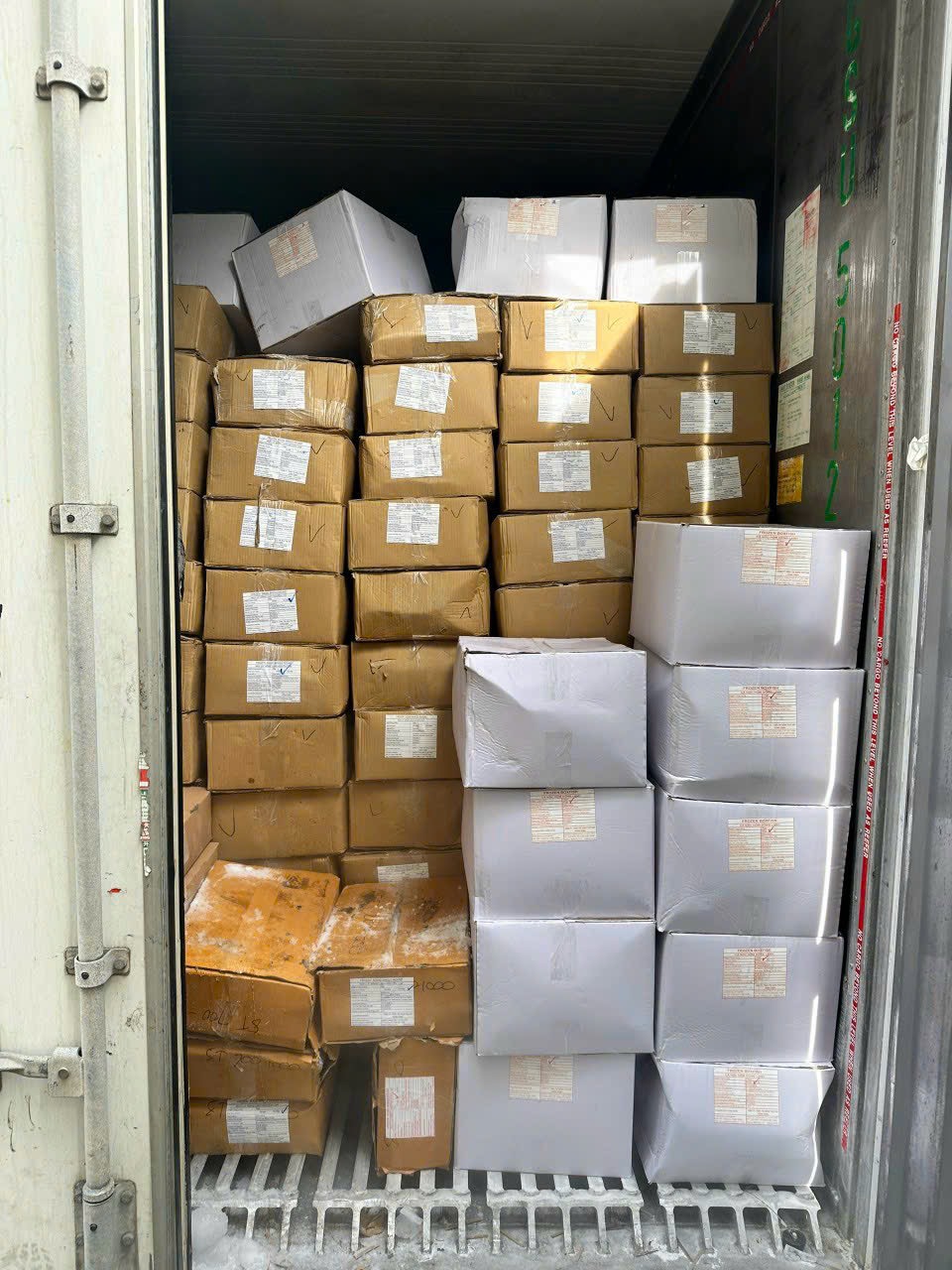
Refrigerated container loading seafood exports from Vietnam to South Korea
6. Why Customers Use AlphaTrans on This Lane
- We compare VKFTA against AKFTA for you. Most shippers don’t realise both apply — we check which one actually saves more on your specific HS code.
- Customs clearance is in-house. Our licensed brokerage files more than 10,000 declarations a month at Cat Lai, Cai Mep, Hai Phong and Da Nang.
- We own the domestic leg. 65 tractor units and 200 chassis for the Vietnam-side trucking, particularly relevant in the congested weeks before Tet.
- Reefer capability for seafood and fresh cargo, a substantial share of southbound Korea volume, handled with continuous temperature logging.
- Partner network in Busan, Incheon and Seoul for destination coordination, inland delivery and import clearance support on inbound shipments.
7. Frequently Asked Questions
Q1: How long does ocean freight between Vietnam and Korea take?
4–6 days from Hai Phong to Busan, the shortest routing on this lane. From Ho Chi Minh City or Cai Mep, 6–8 days to Busan and 7–9 days to Incheon. Add 1–2 days for customs clearance and delivery on a door-to-door basis.
Q2: Should I use VKFTA (Form KV) or AKFTA (Form AK)?
It depends on your HS code and which rule of origin your product meets — VKFTA generally offers deeper preferences but stricter origin criteria; AKFTA has more lenient rules in some categories. Both remain valid at the same time, and businesses can choose whichever is more favourable for a given shipment. We check both before you commit to a certificate.
Q3: Do I need a Certificate of Origin for every shipment?
Not always. Shipments with a customs value under roughly USD 600 FOB are generally exempt from presenting a C/O to claim preferential treatment, though the exact threshold and conditions are set by the importing customs authority — confirm for your specific shipment rather than assuming it applies.
Q4: What are the main exports from Vietnam to Korea?
Garments, footwear, seafood, wooden furniture and electronic components make up the bulk of southbound-to-Korea volume, alongside coffee and cashews.
Q5: What are the main imports from South Korea into Vietnam?
Electronic components and semiconductors, industrial machinery, plastic resin and chemicals, automotive parts, and cosmetics — much of it tied to Korean FDI manufacturing operations based in Vietnam.
Q6: Can you ship seafood or temperature-sensitive cargo to Korea?
Yes, via reefer container with continuous temperature logging — a common requirement on this lane given the volume of seafood and fresh agricultural exports moving to Korea.
Q7: Can you ship volumes under 15 CBM?
Yes, through LCL consolidation via our partner CFS facilities in Busan and Incheon, with weekly departures in both directions.
Q8: Which Vietnamese port should I use for the shortest transit to Korea?
Hai Phong offers the shortest sailing times to both Busan and Incheon. If your factory or warehouse is in Southern Vietnam, weigh the shorter Hai Phong sea leg against the inland trucking cost of moving cargo north — we quote both legs together so you can compare total delivered cost.
8. Get a Vietnam – Korea Quote in 15 Minutes
Send us four things and we will return a complete, itemised quotation: