For Japanese manufacturers and multinational FDI factories in Vietnam, precision is everything. In a lean, Just-In-Time (JIT) model, one delayed container or one customs paperwork dispute doesn’t just disrupt logistics — it halts assembly lines.
AlphaTrans has specialized in this corridor since 2016 and connects every major Japanese port to Vietnam’s key economic zones with asset-backed operations and documentation that complies with both Japanese and Vietnamese customs, in-house through our own customs clearance team.
Table of Contents
1. Sailing Schedules
| Direction | Loading ports | Discharge ports | Transit | Frequency |
|---|---|---|---|---|
| Vietnam → Japan | Cat Lai (HCMC), Cai Mep | Tokyo | 6–9 days | Up to 4 sailings/week |
| Vietnam → Japan | Cat Lai (HCMC), Cai Mep | Nagoya | 7–9 days | Up to 4 sailings/week |
| Vietnam → Japan | Cat Lai (HCMC), Cai Mep | Kobe | 8–12 days | Up to 4 sailings/week |
| Vietnam → Japan | Cat Lai (HCMC), Cai Mep | Hakata (Fukuoka) | 5–8 days | 2–3 sailings/week |
| Vietnam → Japan | Hai Phong, Da Nang | Yokohama / Osaka | 7–13 days | Weekly |
| Japan → Vietnam | Tokyo / Nagoya / Kobe / Hakata | Cat Lai, Cai Mep, Hai Phong, Da Nang | 8–14 days | Up to 4 sailings/week |
Schedules are references and vary with carrier rotation, weather and terminal conditions. Contact us for the current weekly sailing schedule.
Hakata, on Kyushu in southwestern Japan, sits closer to Vietnam than Tokyo, Nagoya or Kobe — for factories in the Fukuoka/Kyushu manufacturing belt, that geography translates directly into a shorter sea leg, not just a shorter distance on a map.

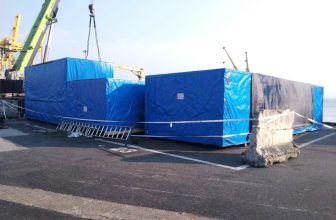
Industrial machinery shipped from Japan to Vietnam
2. FCL and LCL Rates
2.1 Indicative Rates
| Service | Hai Phong | HCMC / Cai Mep |
|---|---|---|
| LCL (per CBM, incl. THC) | 32 – 50 USD | 35 – 55 USD |
| FCL 20’DC | 420 – 620 USD | 480 – 700 USD |
| FCL 40’HC | 650 – 950 USD | 720 – 1,050 USD |
Rates last reviewed July 2026. Ocean freight only — destination local charges are quoted separately. Contact us for a live itemised quote.
2.2 Service Types and Equipment
Full Door-to-Door covers pickup, both customs clearances and delivery under all commercial terms including EXW, FOB, CFR, CIF, DAP and DDP. Door-to-Port, Port-to-Door and Port-to-Port are available where either side already manages clearance and inland transport.
Equipment covers standard 20’/40′ dry containers for general cargo, Flat Rack and Open Top for precision machinery and automotive parts needing custom lashing, reefer containers for cold-chain and fresh agricultural goods, and ISO tanks for liquid chemicals under DG-certified handling.
3. Choosing Your Japan Port: Why Hakata Matters for Kyushu-Based Manufacturers
Most Vietnam–Japan freight defaults to Tokyo, Nagoya or Kobe because that’s where the bulk of Japan’s manufacturing base historically concentrated. But if your factory or supplier sits in the Fukuoka/Kyushu region, routing everything through Kobe or Tokyo adds Japanese domestic transport that a Hakata discharge avoids entirely.
- Tokyo — highest sailing frequency, the default for Kanto-region cargo and general consolidation.
- Nagoya — the gateway for Chubu region manufacturing, including a significant share of automotive and precision equipment traffic.
- Kobe — serves Kansai-region industry; historically one of Japan’s primary container hubs, though now running a longer transit from Vietnam than the other three.
- Hakata (Fukuoka) — the shortest sea leg from Vietnam of the four, and the direct gateway for Kyushu’s electronics, automotive and semiconductor manufacturing cluster. Sailing frequency is lower than Tokyo’s, so if your cargo ready date is tight, confirm the weekly schedule before assuming Hakata is available on demand.
- The practical rule: match the port to where your cargo actually starts or ends in Japan, not to which port name is most familiar. A shorter Hakata sea leg with less frequent sailings can still beat a longer Kobe or Tokyo routing once you account for total delivered time — we compare all four against your specific factory location at quotation stage.
4. Form AJ and Form VJ: Preferential Duty on This Lane
Vietnam and Japan trade under two agreements that both apply — AJCEP (ASEAN–Japan, Certificate of Origin Form AJ) and VJEPA (the bilateral Vietnam–Japan agreement, Form VJ). Neither cancels the other out, and the better rate for a given shipment depends on the HS code and which rule of origin your product satisfies.
For some tariff lines, VJEPA’s bilateral schedule reaches 0% duty faster than AJCEP’s regional one; for others, the reverse is true. We check both against your HS code before booking and confirm which certificate delivers the lower landed cost, rather than defaulting to whichever your supplier has always used.
On-site defense matters as much as the certificate itself. A single data-entry error can cause Vietnam Customs to query a Form AJ or Form VJ mid-clearance. Our brokers handle this at the port directly — negotiating release under a temporary guarantee where needed so a JIT production line doesn’t stop while the paperwork is corrected, then following up with your Japanese counterpart to have the certificate reissued within the legal refund window.
5. Standard Operating Procedure (6 Stages)
- RFQ and technical assessment. Cargo specifications, trade terms and target dates reviewed within minutes.
- Transparent quotation and advisory. An itemised quote plus guidance on HS classification, duty treatment and any specialized import licensing.
- Booking and space allocation. Carrier space secured, equipment positioned, origin pickup coordinated.
- Documentation audit. Every B/L and shipping document verified against your data before the vessel departs — including the Form AJ/VJ check above.
- Real-time tracking. Milestone updates through departure, transshipment where applicable, and arrival.
- Arrival and fast-track release. Arrival notice, rapid customs declaration, and final haulage to your factory floor.
6. Commodities on the Vietnam–Japan Lane
| Direction | Main categories |
|---|---|
| Vietnam → Japan | Garments, footwear and textile components, seafood and fresh agricultural products, wooden furniture, electronic components, personal gifts and household goods |
| Japan → Vietnam | Precision machinery and automotive parts, industrial equipment and spare parts, electronic components, chemicals and solvents, interior decorations |
Precision machinery and automotive parts moving from Japan into Vietnam’s assembly plants are handled with custom lashing plans and industrial anti-rust packing — vacuum sealing, VCI barrier film and calculated silica gel dosing — to protect against condensation over the voyage. For equipment requiring rigging or positioning on arrival, our project cargo team picks up where the ocean leg ends.
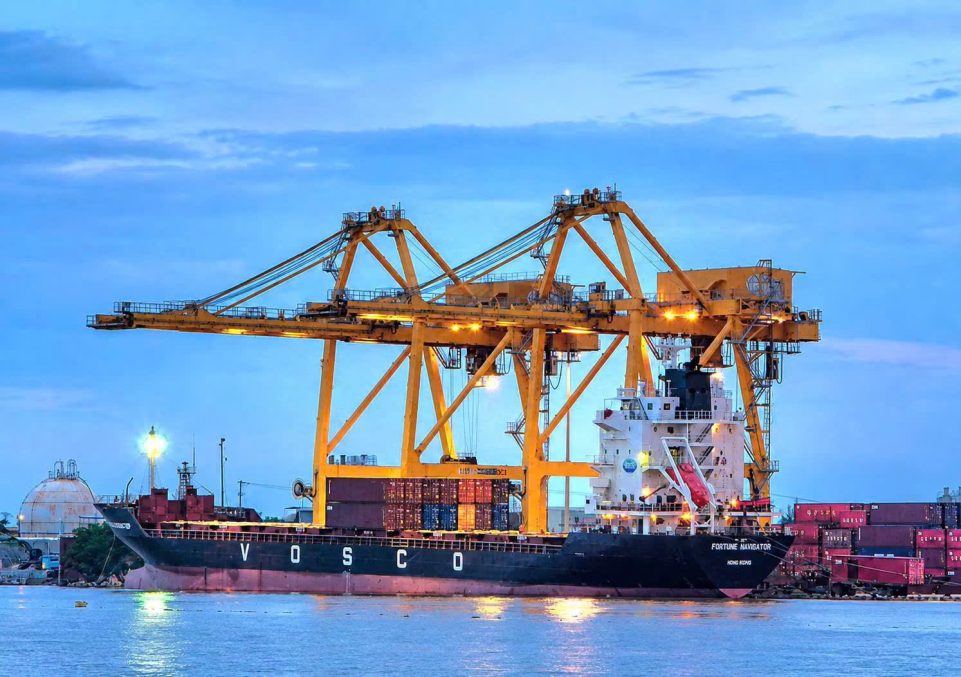
Container vessel transporting cargo from Vietnam to Japan
7. Why Customers Use AlphaTrans on This Lane
- Crisis ownership, not call-center escalation. When a customs dispute or terminal congestion threatens a JIT schedule, our senior management takes direct control of the file and negotiates on-site.
- Two agreements checked, not one. We compare Form AJ against Form VJ for your specific HS code rather than assuming the certificate your supplier always uses is the cheaper option.
- Hakata gets the same attention as Tokyo. Most forwarders default every Kyushu shipment through Kobe or Tokyo out of habit — we route based on your factory’s actual location.
- In-house customs brokerage. Over 10,000 declarations filed a month across Cat Lai, Cai Mep, Hai Phong and Da Nang, by the same team that quoted your shipment.
- Full route network. Beyond Japan, our complete lane coverage is on the international sea freight services page, including China, Korea and Taiwan.
8. Frequently Asked Questions
Q1: How long does ocean freight between Vietnam and Japan take?
6–9 days to Tokyo, 7–9 days to Nagoya, 8–12 days to Kobe, and 5–8 days to Hakata — the shortest of the four given its southwestern location. Add 1–2 days for customs clearance and delivery on a door-to-door basis.
Q2: Should I ship to Hakata instead of Tokyo or Kobe?
If your factory or supplier is based in Fukuoka or elsewhere on Kyushu, yes — Hakata offers the shortest sea leg from Vietnam and avoids extra Japanese domestic transport. Sailing frequency is lower than Tokyo’s, so confirm the weekly schedule against your cargo ready date before booking.
Q3: Should I use Form AJ or Form VJ for preferential duty?
It depends on your HS code and which rule of origin your product meets — AJCEP (Form AJ) and VJEPA (Form VJ) have different schedules, and one is often cheaper than the other for a given product. We check both before you commit to a certificate.
Q4: What happens if Vietnam Customs disputes my Form AJ or Form VJ?
The shipment can normally still be released against a temporary guarantee or standard-rate duty payment while the certificate is corrected and reissued within the legal refund window — our on-site brokers manage this so a JIT line doesn’t stop.
Q5: Can you handle precision machinery and automotive parts requiring special packing?
Yes — custom lashing plans, industrial vacuum sealing, VCI anti-rust film and calculated desiccant dosing protect equipment from condensation over the voyage. For rigging or positioning on arrival, our project cargo team continues where the ocean leg ends.
Q6: Can you ship volumes under 15 CBM?
Yes, through weekly LCL consolidation in both directions, across all four main Japanese gateways.
Q7: Do you handle cold-chain and dangerous goods shipments?
Yes — reefer containers with temperature logging for seafood and fresh produce, and DG-certified handling with proper documentation for chemicals and solvents.
Q8: What triggers a schedule change and how do you handle it?
Carrier rotation changes, port congestion and blank sailings can all shift a schedule. We track every booking and notify you immediately of any change, rather than letting you discover it when the arrival notice doesn’t match expectations.
9. Get a Vietnam – Japan Quote in 15 Minutes
Send us four things and we will return a complete, itemised quotation: