


AlphaTrans moves FCL and LCL ocean freight from every major Vietnamese port to 49 countries, and handles the customs, documentation and inland transport at both ends. We hold a Vietnamese customs brokerage licence and run our own truck fleet — we are not a booking agent reselling someone else’s service.
Transit times run from 2 days to Bangkok up to 50 days to Europe or South America. On long-haul lanes the biggest variable right now is whether your service routes via the Suez Canal or around the Cape of Good Hope — a difference that can exceed two weeks. We tell you which one your booking is on.
Find your destination below, or send us your cargo details and we will come back with a rate, a schedule and the routing it assumes.
Sea freight services refer to the transportation of commercial cargo by ocean between ports in different countries or regions.
Compared with air freight, ocean transportation is generally more suitable for large-volume, heavy or non-urgent shipments because it offers significantly greater cargo capacity and can be more economical for international trade.
A typical international sea freight shipment may include:
For businesses shipping from Vietnam, choosing the right freight forwarder is important because the ocean freight itself is only one part of the complete logistics process.
ATL can coordinate the shipment from the cargo origin in Vietnam through the export port and international ocean transportation, depending on the agreed shipping terms and destination requirements.
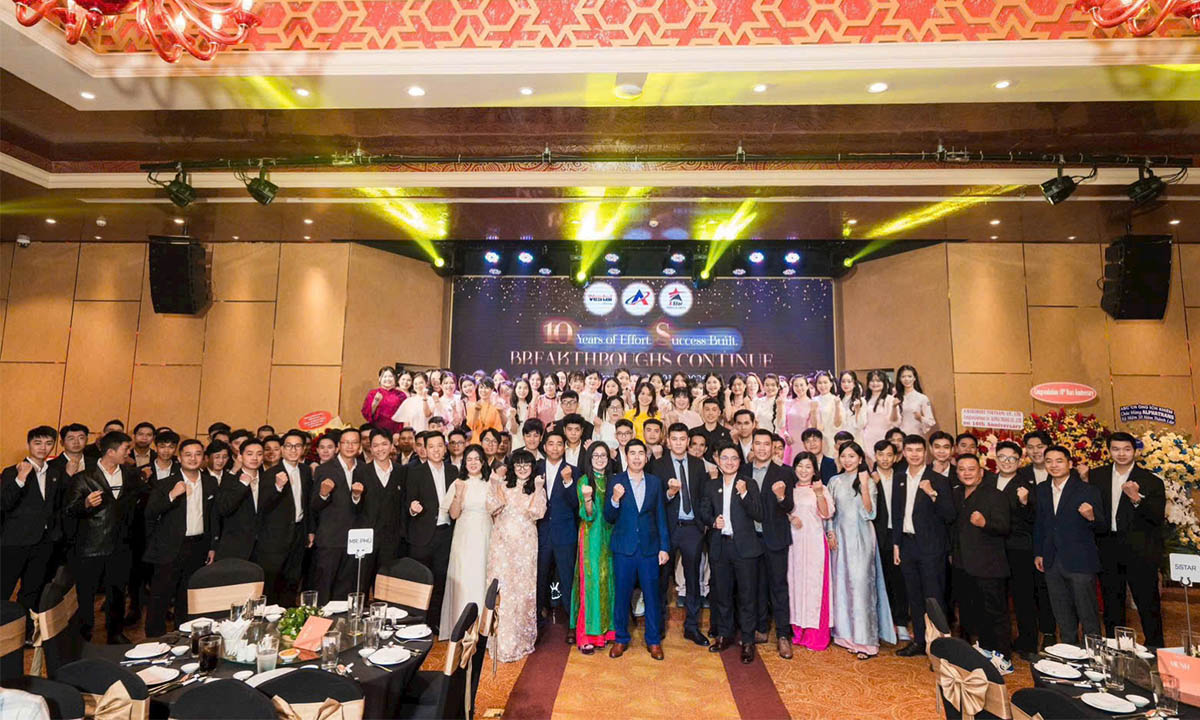
ATL provides flexible sea freight shipping solutions for exporters, importers, manufacturers, trading companies and other businesses.
Full Container Load (FCL) is suitable when the cargo volume is sufficient to use a dedicated container.
FCL shipments can provide:
Common container options include:
Container availability depends on the cargo type, route and shipping line.
Less than Container Load (LCL) is designed for shipments that do not require a full container.
Instead of paying for an entire container, cargo from multiple shippers is consolidated into one container.
LCL can be suitable for:
ATL can arrange LCL consolidation from Vietnam to various international destinations.
Cargo consolidation combines shipments from multiple customers into a container to improve container utilization.
This can be useful when a shipment is too small for FCL but the customer still wants to use ocean transportation rather than air freight.
Depending on the route, consolidation may be available from major Vietnamese gateways including Ho Chi Minh City, Hai Phong and other international shipping hubs.
Port-to-port shipping focuses on transportation between the origin port and destination port.
This option can be suitable for customers who already have their own:
For customers looking for a more complete solution, ATL can coordinate door-to-door sea freight shipping, combining inland transportation, customs clearance and ocean freight.
A typical door-to-door shipment can include:
Factory → Trucking → Export Customs → Origin Port → Ocean Freight → Destination Port → Import Customs → Final Delivery
The exact scope depends on the agreed Incoterm and service requirements.
Each destination below has its own page covering ports, transit times, duty, documentation and the compliance requirements specific to that market.
China · Japan · South Korea · Taiwan · Hong Kong
Short, high-frequency lanes — 2 to 10 days, with direct sailings from Cat Lai, Cai Mep and Hai Phong. Loading at Hai Phong usually saves a day or two.
Thailand · Malaysia · Singapore · Indonesia · Philippines · Cambodia
The fastest lanes we run. Bangkok and Port Klang in 2 to 4 days. Most goods move duty-free under ATIGA with a Form D certificate of origin.
India · Bangladesh · Sri Lanka
Documentation-heavy lanes. Bangladesh in particular requires a Letter of Credit and a valid import licence on the buyer’s side before cargo can move.
United Arab Emirates · Qatar · Turkey · Iran · Yemen
Jebel Ali is the regional hub and the usual transshipment point for onward Gulf cargo. Dubai shipments are covered on the UAE page.
United Kingdom · Germany · Netherlands · Belgium · France · Denmark · Sweden · Norway · Finland · Poland
Most goods qualify for reduced or zero duty under EVFTA with a EUR.1 certificate. Transit currently depends heavily on Suez versus Cape of Good Hope routing — we tell you which one your booking is on.
Italy · Spain · Portugal · Greece · Croatia · Czech Republic · Hungary · Austria · Luxembourg · Russia
Austria, the Czech Republic, Hungary and Luxembourg are landlocked. Cargo arrives through a gateway port and continues by rail, and which gateway you choose matters more than the ocean rate.
United States · Canada · Mexico
US West Coast is the shortest routing. East Coast cargo moves via Panama or transships.
Brazil · Argentina · Colombia · Uruguay · Cuba
Long-haul lanes with limited direct service. Most cargo transships through a hub in Asia or Europe.
Both markets run strict biosecurity regimes. Timber packaging must be ISPM 15 treated, and containerised sea cargo needs a packing declaration.
Not listed? We ship beyond the destinations above. Send us the details and we will quote it.
| Port | UN/LOCODE | Serves | Why choose it |
|---|---|---|---|
| Ho Chi Minh City (Cat Lai) | VNSGN | HCMC, Binh Duong, Dong Nai, Long An | Vietnam’s largest container port and our busiest load point. Widest choice of services |
| Cai Mep – Thi Vai | VNCMT | Southern industrial zones, Ba Ria–Vung Tau | Deep-water berths take the largest vessels — often a more direct routing to the US and EU, with fewer transshipments |
| Hai Phong | VNHPH | Hanoi, Bac Ninh, Hai Duong, Hung Yen, Quang Ninh | Closer to Northeast Asia — usually a day or two faster to Japan, Korea and China |
| Da Nang | VNDAD | Central Vietnam, and cargo from Laos | Two container terminals and a CFS |
| Quy Nhon | VNUIH | Binh Dinh and the Central Highlands | Regional port with direct international services |
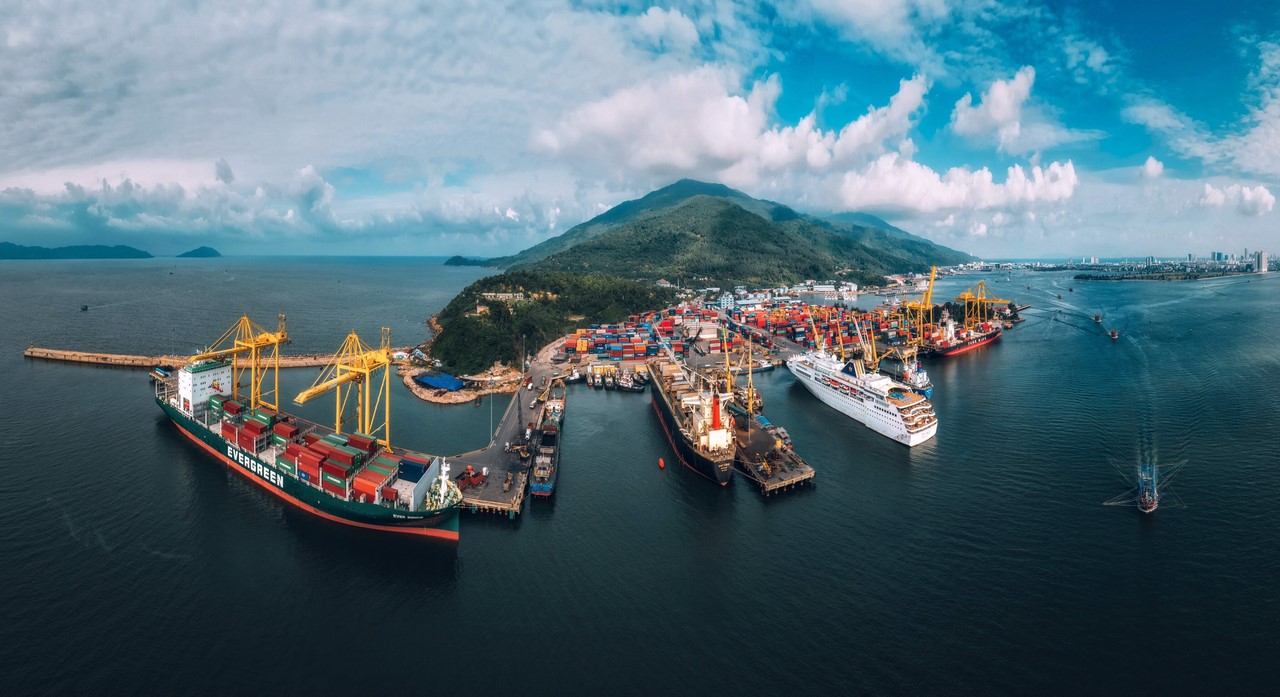
If you produce in more than one region, ask us to compare. On a seven-day lane to Japan, loading at Hai Phong instead of Cat Lai can cut one to two days — proportionally significant. On long-haul EU and US lanes, Cai Mep’s deep-water berths sometimes remove a transshipment entirely.
FCL — Full Container Load. One shipper takes the whole container. Better once volume passes roughly 15 CBM, and for cargo that should not share space with other consignments. You control loading and sealing, and handling is lower than consolidated cargo.
Equipment: 20′ and 40′ dry, 40′ high cube, reefer, flat rack, open top, platform, tank, and garment-on-hanger.
LCL — Less than Container Load. Cargo from several shippers shares a container and you pay for chargeable volume or weight. Weekly consolidation from Ho Chi Minh City, Hai Phong and Da Nang.
| Factor | LCL | FCL |
|---|---|---|
| Cargo volume | Under ~15 CBM | Over ~15 CBM |
| Container | Shared | Dedicated |
| Handling | More — CFS at both ends | Less |
| Transit | Consolidation and deconsolidation add days | Moves as a sealed unit |
| Best for | SMEs, samples, regular small consignments | Manufacturers and higher-volume exporters |
There is no universal crossover point. An honest comparison includes ocean freight, origin and destination handling, trucking, customs, equipment and surcharges together — not the freight line alone. Send us the dimensions and we will price both.
Pack LCL properly. Consolidated cargo is handled more often, stacked with other consignments and exposed to temperature and humidity changes at the CFS. Understated dimensions get recalculated at the warehouse and the corrected charge lands on your invoice.

| Destination region | Indicative port-to-port transit |
|---|---|
| Southeast Asia — Bangkok, Singapore, Port Klang | 2–4 days |
| Southeast Asia — Manila, Jakarta, Surabaya | 5–10 days |
| Northeast Asia — Hong Kong, South China | 2–5 days |
| Northeast Asia — Japan, Korea, Taiwan, North China | 3–10 days |
| South Asia — India, Bangladesh, Sri Lanka | 10–18 days |
| Middle East — Jebel Ali and Gulf ports | 14–20 days |
| Australia and New Zealand | 12–18 days |
| US West Coast | 18–26 days |
| US East Coast (via Panama) | 28–35 days |
| North Europe — via Suez | 28–34 days |
| North Europe — via Cape of Good Hope | 38–46 days |
| Mediterranean and Adriatic — via Suez | 25–32 days |
| Mediterranean and Adriatic — via Cape of Good Hope | 42–50 days |
| South America — east coast | 40–50 days |
Indicative ranges from Ho Chi Minh City. Actual transit depends on the specific service, transshipment connections, port congestion and cut-off dates. Ask for the schedule against your cargo ready date.
Since late 2023, most container lines have avoided the Red Sea and routed Asia–Europe services around the Cape of Good Hope — roughly 3,500 extra nautical miles and 10 to 14 days. Some services returned to the Suez Canal during 2026, but the Cape remains the default on most Asia–Europe strings, and carriers have reversed course at short notice before.
A quoted European transit time without a routing attached is meaningless. The same port pair differs by more than two weeks. We name the service and the routing in every quotation.
This also changes which gateway port makes sense. Under Suez routing, Mediterranean and Adriatic ports like Koper and Rijeka are faster from Asia. Under Cape routing, vessels sail up the Atlantic and the North Range ports — Hamburg, Rotterdam, Antwerp — are on the path instead. If you ship to Central Europe, the right gateway today may not be the one you used in 2023.
| Stage | Components |
|---|---|
| Origin | Inland pickup or container trucking · terminal or CFS handling · export customs clearance and documentation |
| Ocean | FCL box rate or LCL chargeable volume · carrier surcharges (THC, BAF, LSS, peak season) · bill of lading and documentation fees |
| Destination | Terminal handling or deconsolidation · import customs brokerage · inspection or special handling · final delivery |
| Taxes | Import duty · destination VAT · product-specific taxes |
| Conditional | Cargo insurance · demurrage, detention and storage beyond free time |
Preferential duty is never automatic. The goods must meet the rule of origin for their HS code, and the right document must be presented at the destination.
| Destination | Document |
|---|---|
| European Union | EUR.1 under EVFTA, or a self-certified invoice declaration under €6,000 |
| United Kingdom | EUR.1 under UKVFTA |
| ASEAN | Form D under ATIGA |
| Japan | Form VJ (VJEPA), Form AJ (AJCEP), Form RCEP, or CPTPP self-certification |
| South Korea | Form AK (AKFTA) or Form VK (VKFTA) |
| China | Form E (ACFTA) or Form RCEP |
| Australia and New Zealand | Form AANZ (AANZFTA), or CPTPP / RCEP |
| India | Form AI (AIFTA) |
| Chile | Form VC (VCFTA) |
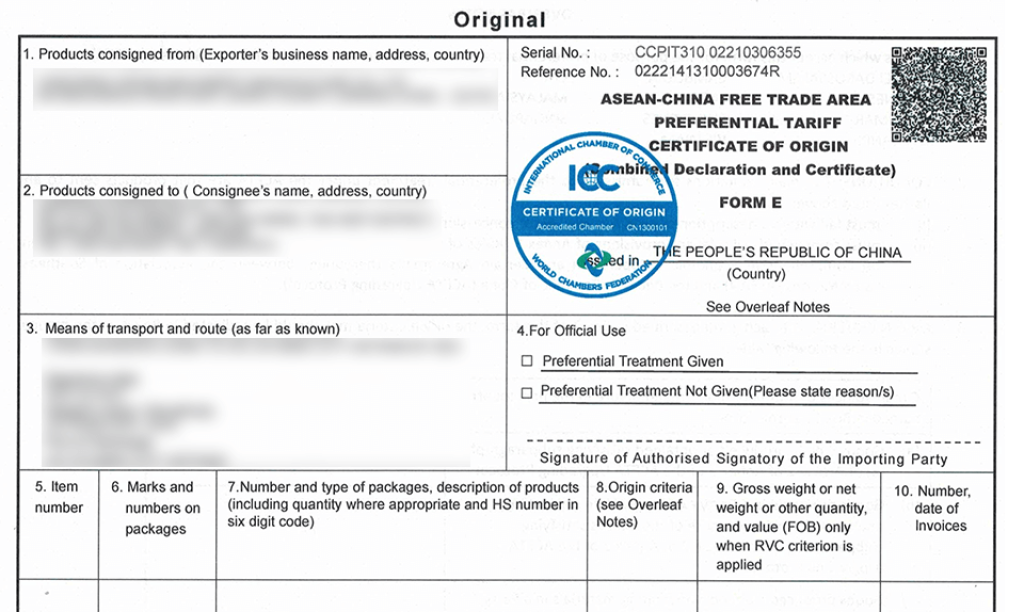
AlphaTrans holds a Vietnamese customs brokerage licence and clears in-house rather than subcontracting. That is what makes repeat shipment programmes run identically each time: the same team applies the same classification and the same document set to every booking.
Standard document set:
On VGM. Under SOLAS, the shipper must declare the verified gross mass of each packed container before it can be loaded — either by weighing the packed container or by an approved calculation method. No VGM, no loading.
On cargo descriptions. Keep them specific and identical across every document. Generic entries like “parts,” “accessories” or “samples” invite customs questions and inspection, and a description that differs between your invoice and your bill of lading is a discrepancy someone has to resolve before release.
| Term | Seller handles | Buyer handles |
|---|---|---|
| EXW | Makes goods available at their premises | Everything from that point, including export clearance |
| FOB | Export clearance and delivery on board at the named port | Ocean freight onward, import clearance, duty, delivery |
| CFR | Ocean freight to the destination port | Insurance, import clearance, duty, delivery |
| CIF | Ocean freight plus marine insurance to the destination port | Import clearance, duty, delivery |
| DAP | Delivery to the named place | Import clearance and duty |
| DDP | Everything, including import clearance and duty | Receipt of goods |
Two things worth knowing before you agree a term.
DDU was withdrawn in Incoterms 2010. If a contract still specifies it, agree DAP instead.
CIF does not work everywhere. Some countries require the importer to place marine insurance with a domestic insurer — Bangladesh is the clearest example. Insurance you arrange in Vietnam will not satisfy the requirement, and CFR or FOB becomes the practical default. We flag this at quotation stage for the markets where it applies.
On DDP: where duties and taxes are included, our quotation states them separately so you can see what is freight and what is tax. Ambiguity on that line is the most common cause of invoice disputes.
With our long-term relationship and contracted sign, Alphatrans be around one of the trusted partners for all biggest shipping lines:
| Factor | Sea freight | Air freight |
|---|---|---|
| Cost for large cargo | Lower | Higher |
| Transit time | Days to weeks | 1–5 days |
| Cargo volume | High capacity | Limited |
| Heavy or oversized cargo | Suitable | Often impractical |
| Urgent shipments | Less suitable | More suitable |
| Best for | Cost-sensitive, high-volume, non-urgent cargo | Time-critical, high-value, low-weight cargo |
Sea freight is the better option when cost and capacity matter more than speed. Air makes sense when a delay costs more than the freight.
We also handle air freight from Vietnam, so if you are weighing the two, send the cargo details and we will price both rather than pushing you toward one.
1. Send the shipment details. Cargo description, HS code, dimensions, gross weight, origin and destination, Incoterm, cargo ready date.
2. Route and service review. We assess FCL versus LCL, check available sailings and their routing, and identify any special handling or compliance issue.
3. Compliance check before booking. HS code checked against the applicable trade agreement, certificate of origin scoped, destination-specific requirements flagged — biosecurity, health certification, import licensing.
4. Quotation and booking. The quotation states service scope, the sailing and its routing, included and excluded charges, free time and where it is measured from, and rate validity. Space is requested after written confirmation.
5. Pickup, export clearance and loading. Cargo collected or delivered to the nominated facility. Export documentation, customs clearance, VGM submission and cut-offs completed per the booking.
6. Ocean transport with milestone updates. Cargo receipt, customs release, vessel departure, transshipment, arrival — with any routing or schedule change reported immediately rather than discovered on arrival.
7. Destination handling and delivery. Import clearance and final delivery where included in the service scope.
General cargo · consumer goods · garments and textiles · footwear · furniture and wooden products · electronics and components · machinery and industrial equipment · manufacturing materials · food and agricultural products · seafood and reefer cargo · chemicals and dangerous goods · project, heavy and oversized cargo.
Dangerous goods, reefer and out-of-gauge cargo are handled subject to technical review and carrier acceptance. Send the detailed description, packaging information and any certificates so we can confirm the right equipment and service — do not assume acceptance from a product category alone.
Supporting services: inland transportation · export and import customs clearance · LCL consolidation · packing and cargo handling · certificate of origin applications · fumigation · phytosanitary certification · cargo tallying · import-export consulting.
How long does sea freight from Vietnam take? From 2 days to Bangkok or Singapore up to 50 days to Europe or South America. The biggest variable on long-haul lanes is whether the service routes via the Suez Canal or the Cape of Good Hope — a difference that can exceed two weeks. See the transit time table above.
Should I choose FCL or LCL? LCL suits shipments under roughly 15 CBM that can be safely consolidated. FCL gives exclusive use of a container and becomes more economical as volume rises. There is no fixed crossover, because the comparison must include handling, trucking, customs and surcharges as well as the freight rate.
Do I need a certificate of origin? Not to move the cargo, but you need one to claim preferential duty. Which document depends on the destination — EUR.1 for the EU and UK, Form D for ASEAN, Form AANZ for Australia and New Zealand, Form VJ or AJ for Japan. Several markets are covered by more than one agreement, and the default choice is not always the best.
What is the export duty from Vietnam? Finished goods generally carry no Vietnamese export duty. Some raw materials and natural resources do.
Can AlphaTrans handle customs clearance as well as freight? Yes. We hold a Vietnamese customs brokerage licence and clear in-house rather than subcontracting.
Which Vietnamese port should I load from? Whichever is closest to your production, unless you have flexibility. Hai Phong is faster to Northeast Asia; Cai Mep often gives a more direct routing to the US and EU. We will compare if you produce in more than one region.
Can I ship oversized or heavy cargo by sea? Yes, but it needs assessment first. Flat rack, open top or breakbulk may be required, and on landlocked destinations rail loading gauge limits can restrict the inland leg even when the ocean leg is fine. Send the dimensions and weight early.
Do you ship dangerous goods and reefer cargo? Yes, subject to technical review and carrier acceptance. Provide the Safety Data Sheet for dangerous goods and the temperature requirement for reefer cargo at enquiry stage.
What documents are required for sea freight? Commercial invoice, packing list, bill of lading, HS code and cargo description, certificate of origin where preferential duty is claimed, and VGM for FCL. Additional certificates depend on the commodity and destination.
Can you arrange door-to-door shipping? Yes — pickup, export clearance, ocean freight, destination handling, import clearance coordination and final delivery. The scope depends on the agreed Incoterm.
Send us the following and we will come back with a rate, the current schedule, and the routing it assumes:
Origin (pickup address or port): Destination (delivery address or port): Cargo description and HS code: FCL or LCL: Container type and quantity, or CBM and dimensions: Gross weight: Incoterm: Cargo ready date: Special requirements (temperature, dangerous goods, oversized):
Complete information lets us compare routings properly and quote without the caveats that turn into surprise charges later.
Address: 45a Nguyen Thuong Hien, Ward Binh Loi Trung, Ho Chi Minh City, Vietnam.


